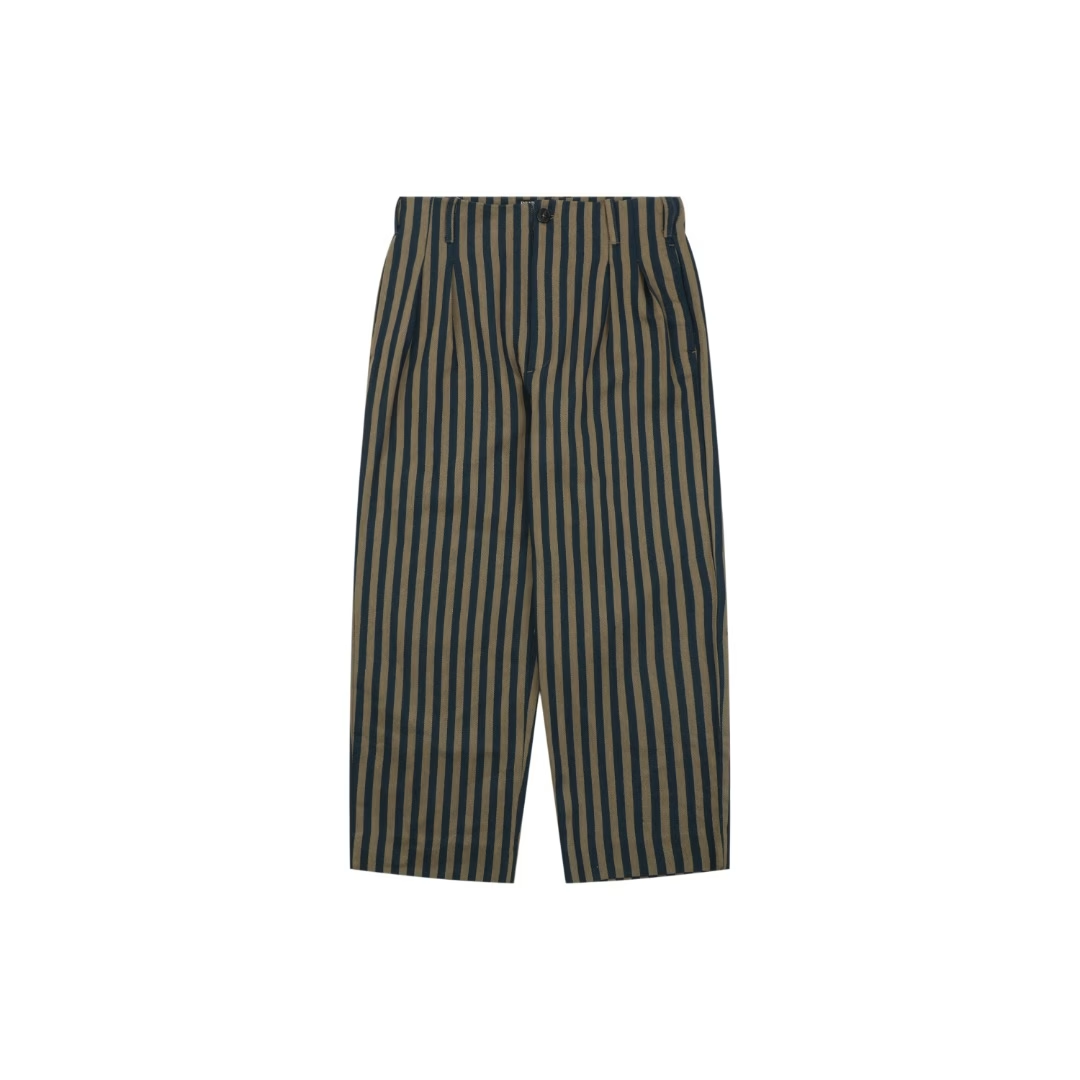
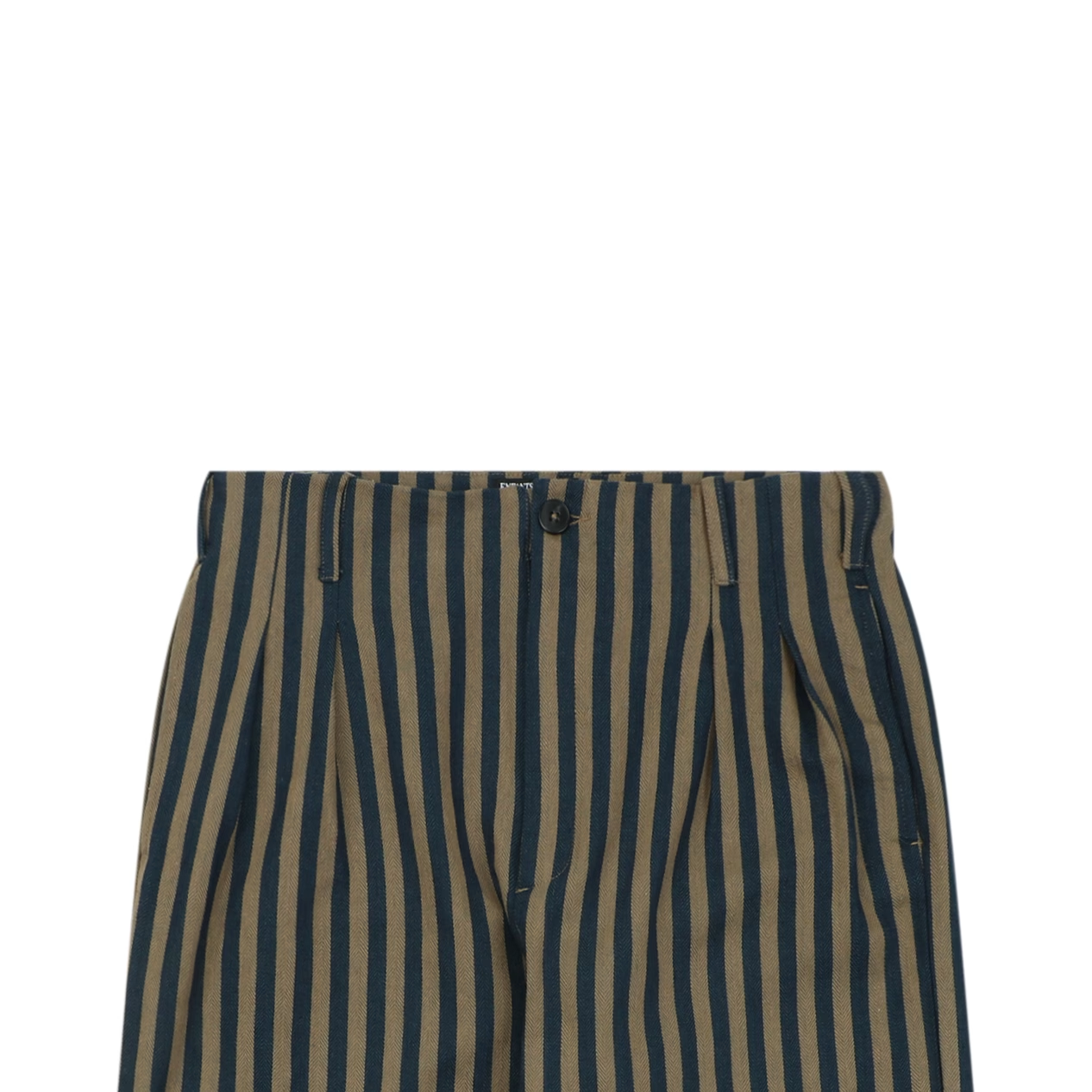
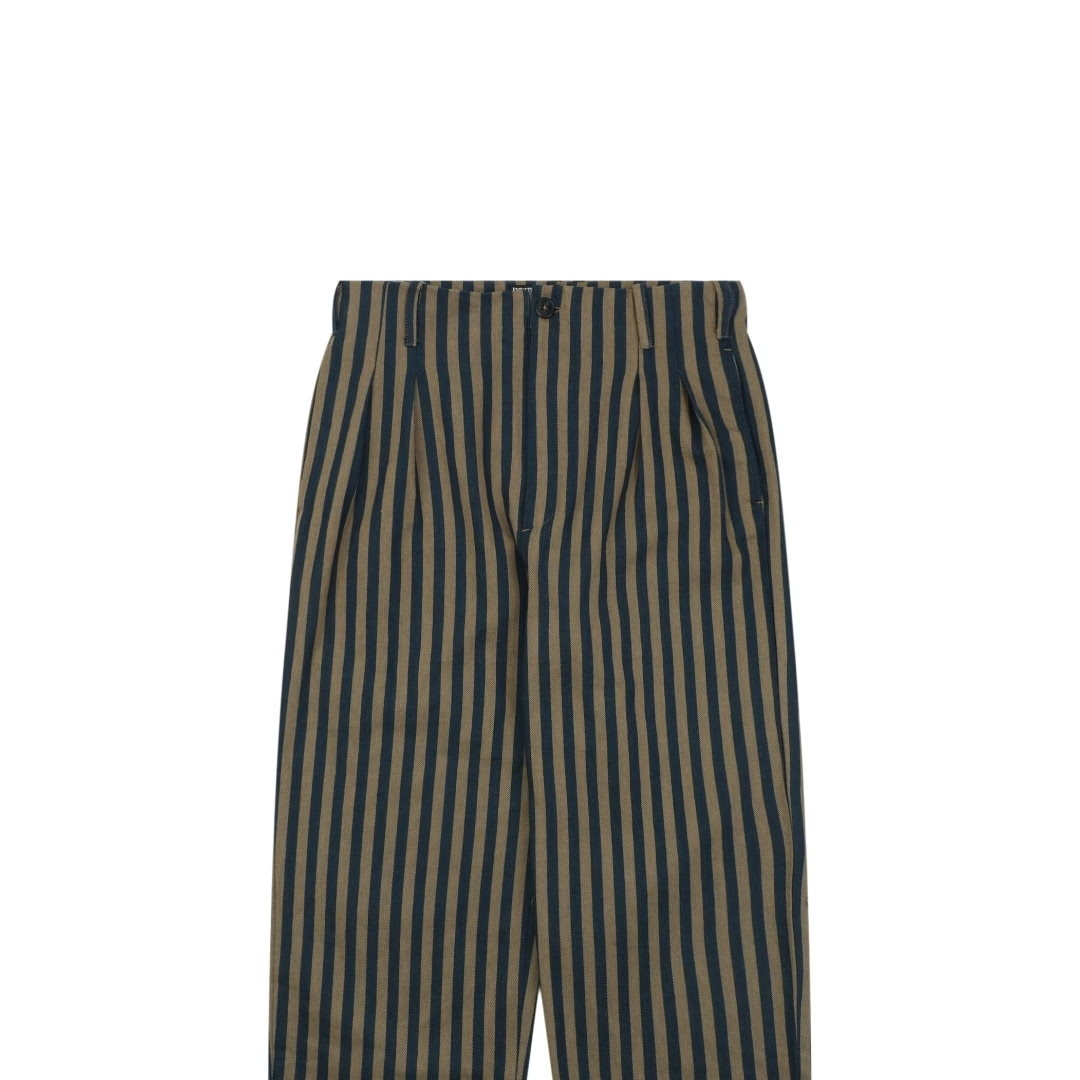
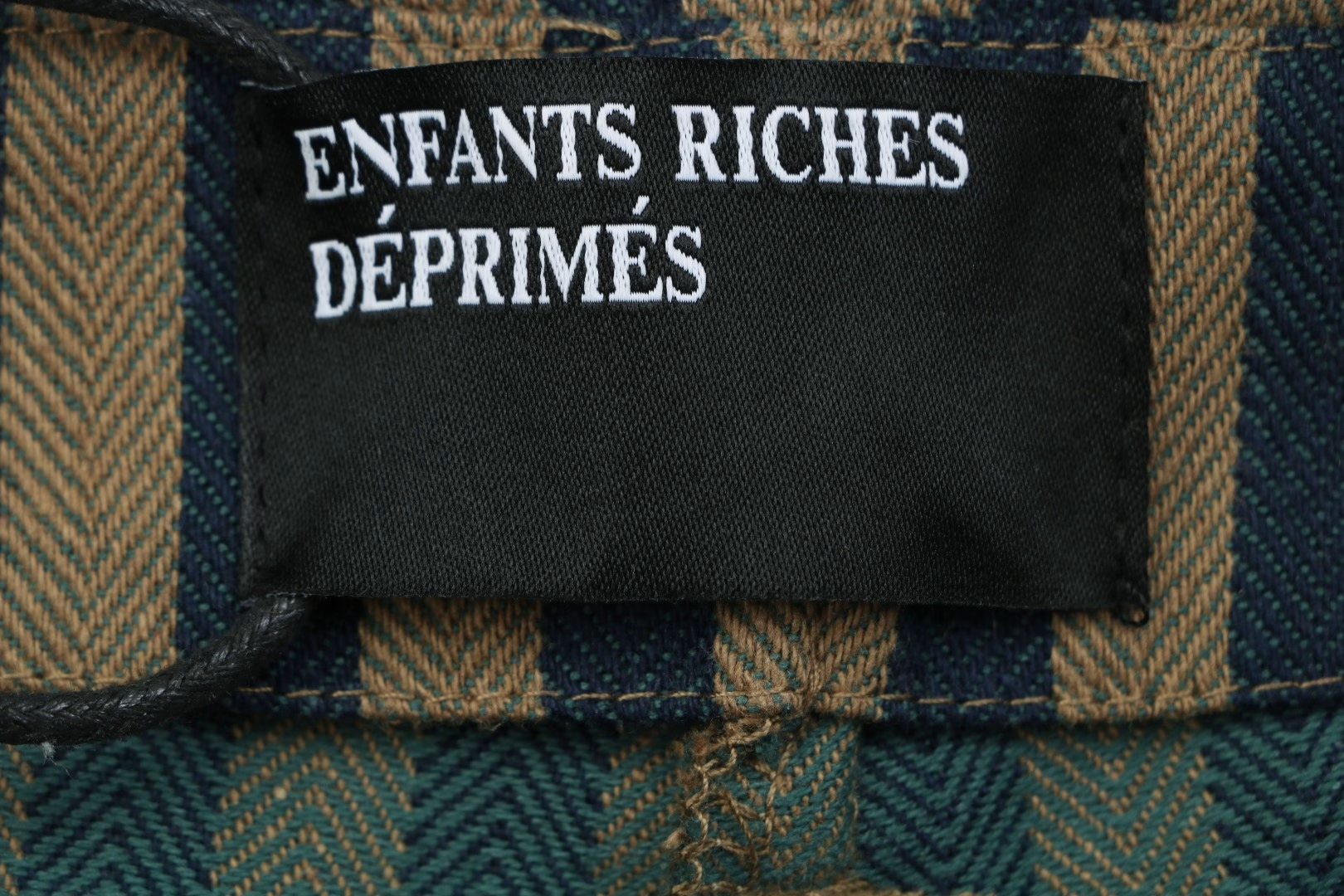
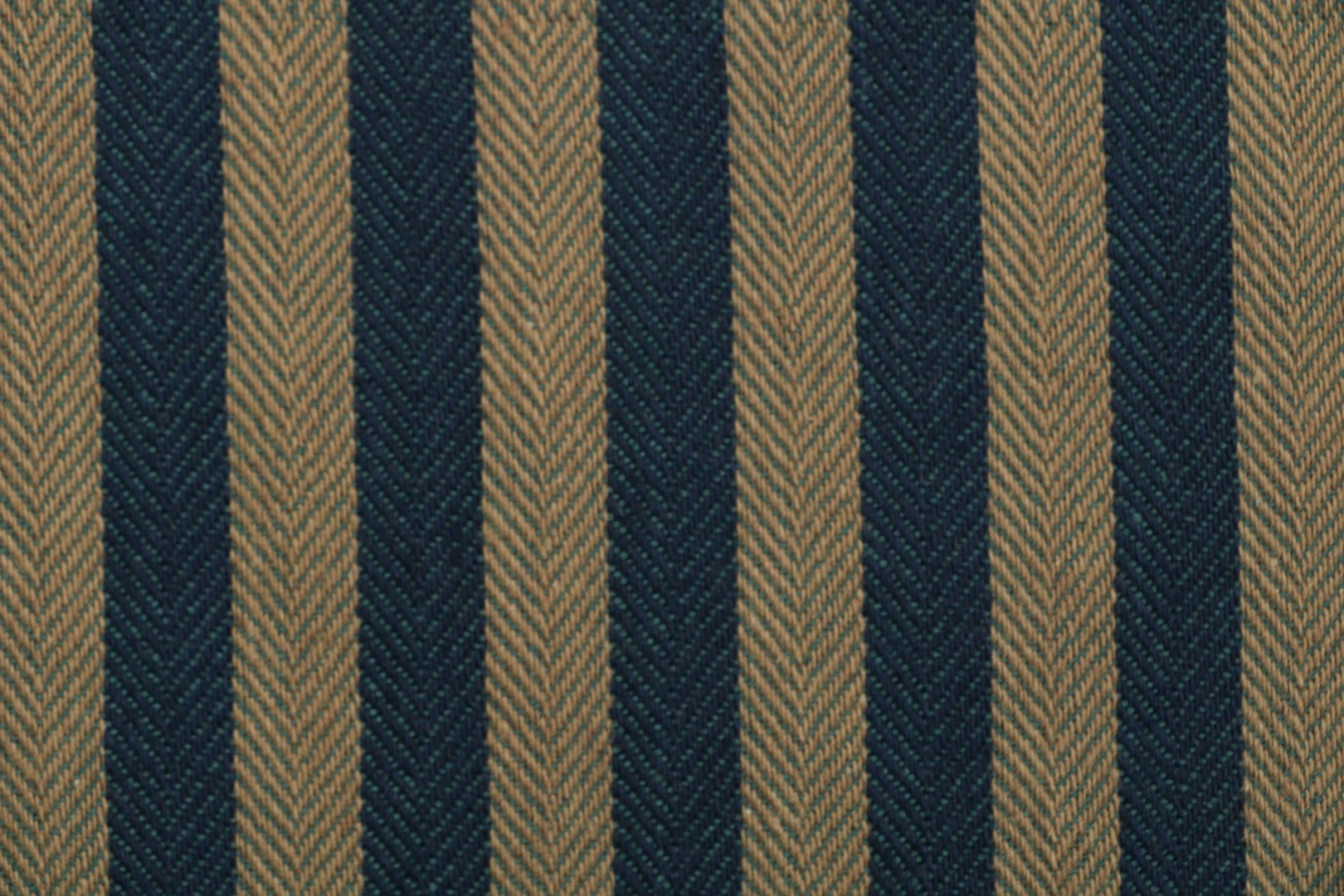
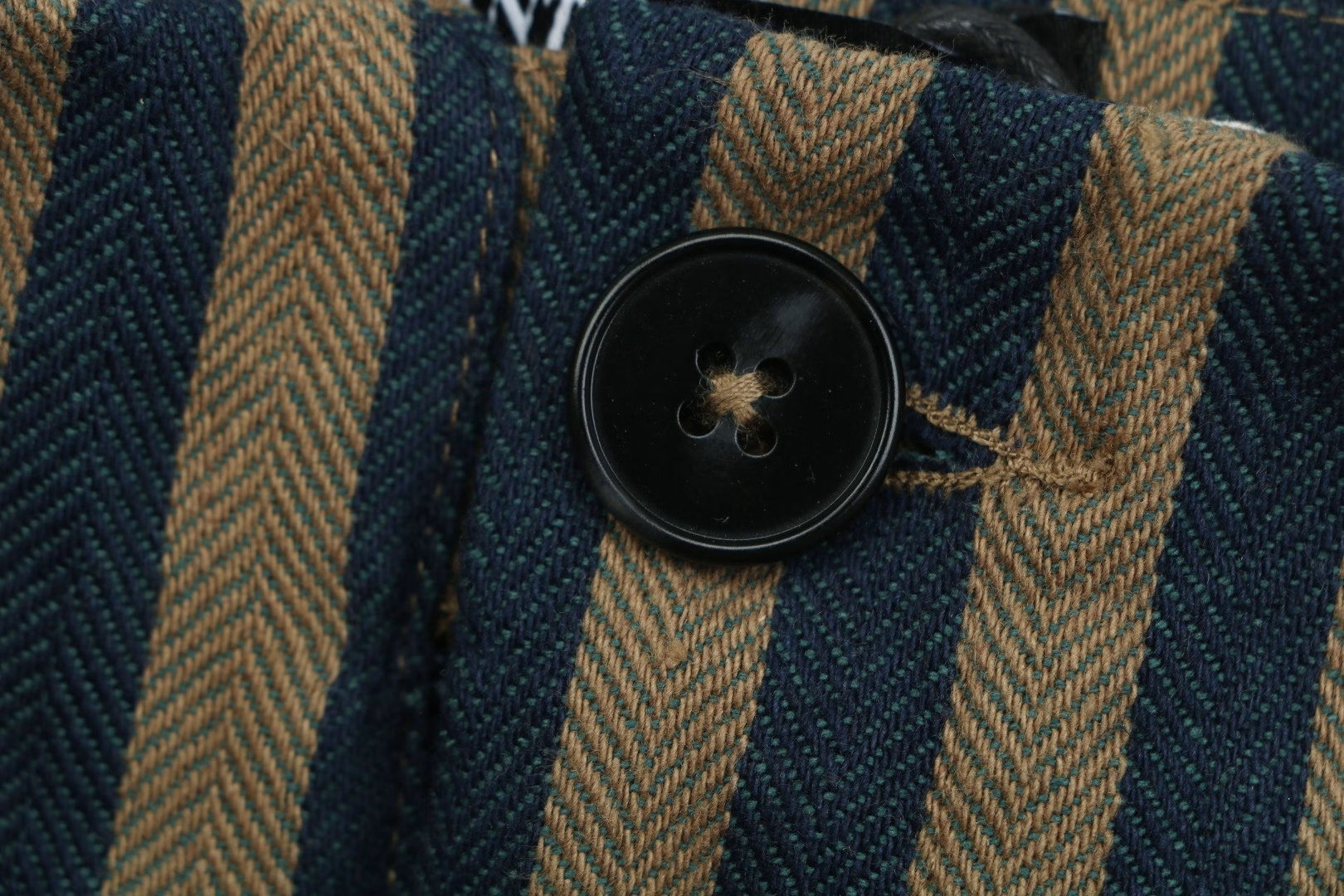
ERD vertical-striped trousersMultiple complex processes are combined, the fabric is aligned, and three-dimensional shaping is achieved. The final garment is carefully controlled through multiple layers of quality checks. The overall production process has a much higher threshold than the conventional plain-colored casual pants available on the market. The fabric is made of a vertical color-spliced twill weave of navy blue and olive green. The width and spacing of the stripes are precisely calibrated. The twill fabric is stiff and well-shaped, with good draping and stability. However, the cutting loss is extremely high. The biggest challenge in the finished product is achieving precise alignment of the vertical stripes throughout the entire area. The front piece has double pleated sections, side seams, back piece, waistband, and trouser leg. All the joint positions must have vertical and continuous stripes without any breaks. During the cutting process, the fabric's warp tension is locked throughout the layout stage to prevent any tearing or stretching that could cause the stripes to be skewed. The fabric loss is 30% higher than that of ordinary plain-colored pants. The silhouette is a classic carrot-shaped figure. The core shaping process is the double-layer symmetrical pleating on the front piece. Two sets of live pleats are fixed at specific points and sewn. The depth of the pleats, the width of the pleat closure, and the execution of the unified standards are all standardized. During sewing, the fabric is layered and sent through the cutting machine to control the fabric's slip, ensuring natural and undistorted draping. There is no twisting or folding. The waistband uses the same stripe fabric for full-seam stitching. The waistband flap is fixed at equal intervals with the waistband. Each joint seam requires seamless connection of the vertical stripes. Any slight misalignment of the stripes will be identified as defective. The side seams and crotch of the finished garment are reinforced with a high-density double-line sandwiching process. The twill fabric is sewn with a lowered feeding pressure to avoid sewing tension that could damage the stripe regularity. After all the sewing processes are completed, it enters the three-dimensional steam setting process. The vertical stripes are aligned vertically and the vertical degree of the trouser body is corrected through segmented ironing and adjustment. The pre-shrinkage ratio of the fabric is locked to avoid distortion and collapse of the stripes after washing. From the control of the woven fabric, high-precision stripe cutting, three-dimensional pleating sewing to the final garment shaping, dozens of processes are closely linked. Any deviation in any step will directly damage the overall texture of the finished garment. The quality control and selection standards for this product are extremely strict.

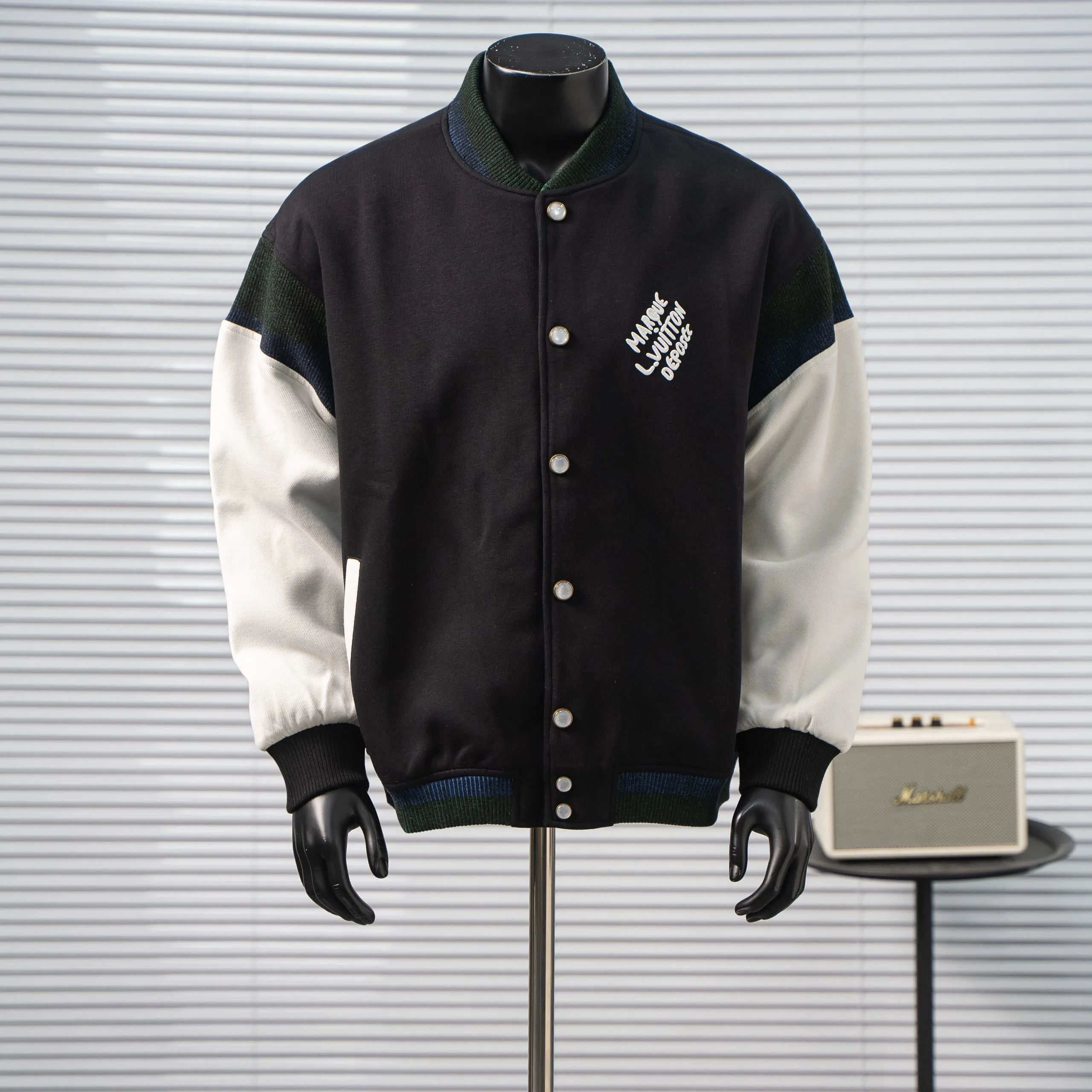 LOUIS VUITTON LV Black and White Striped Leather Baseball Jacket CoatThis is a newly developed product purchased from the original source. The fabric used is thickened 550g Sel cotton from the trendy brand, imported fine combed cotton double-strand thread ground fabric. It features a colorful gradient pattern and is a masterpiece. The imported machine performs precise embroidery, with multiple fabric composites and original custom accessories. Customized pearl buttons are provided, and it has a loose fit. It is available for both men and women.
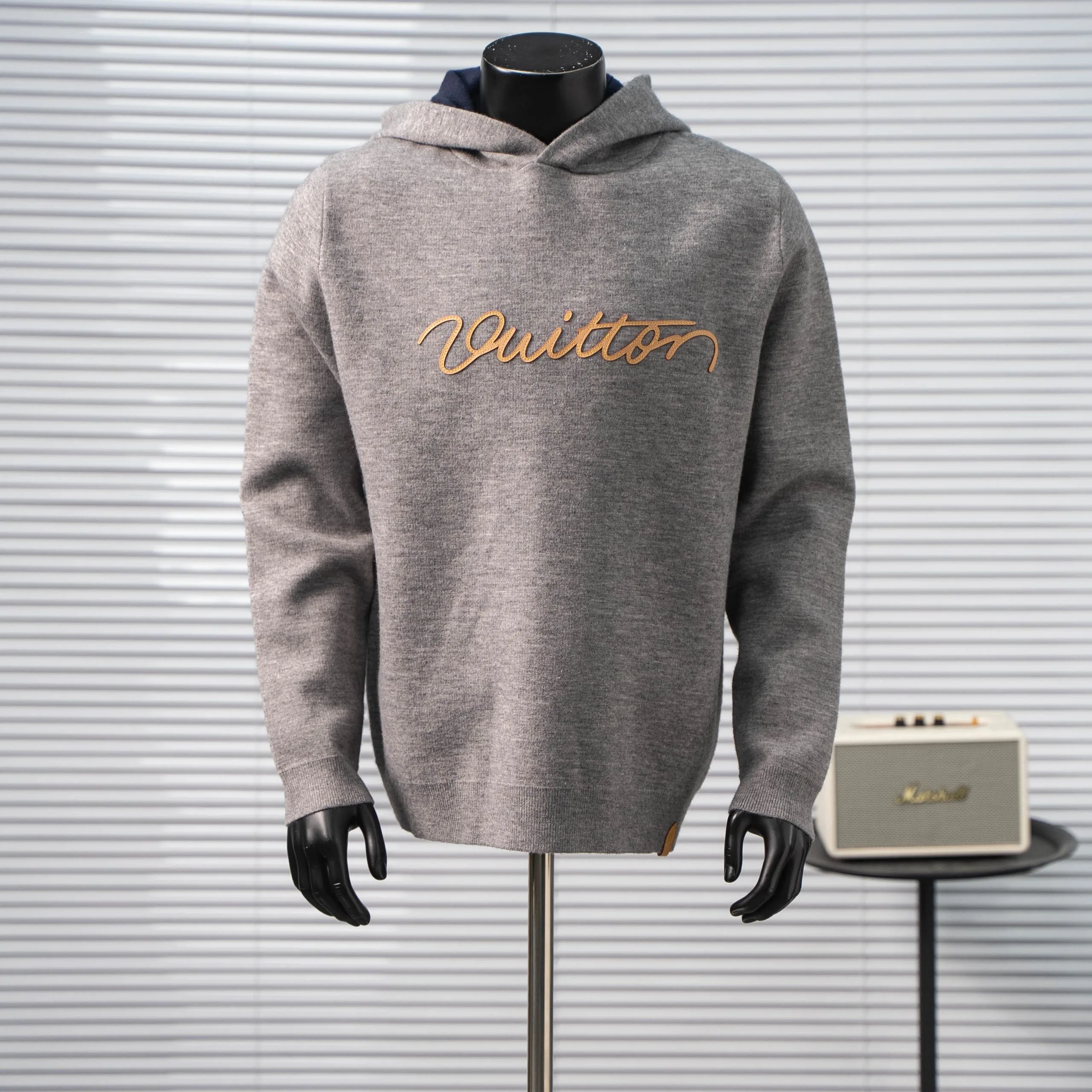 LOUIS VUITTON LV Trunk Double-sided Cashmere Blend Knitted Hooded SweatshirtAuthentic product purchased and developed. Made of wool and cashmere blended yarn. Using German imported (SOTO) 14 knitting, template embroidery, wool washing, custom leather label and trademark, well-fitting design.
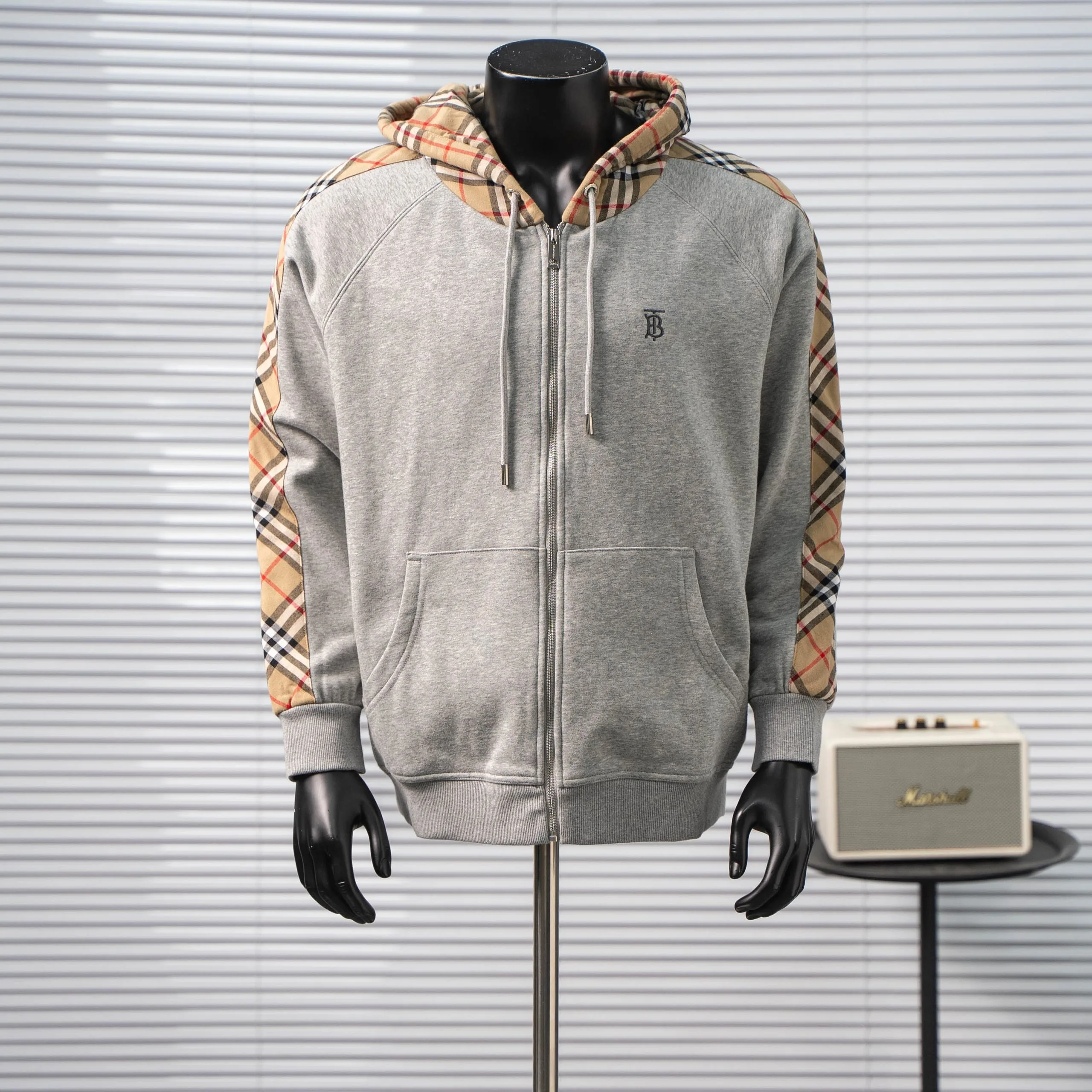 BURBERRY (Barbour) Plaid Patched Zippered Hooded CoatFabric: Made of high-weight pure cotton fabric, it has a thick and sturdy feel, is not prone to deformation, and offers both breathability and warmth. It is suitable for single wear in spring and autumn or as an inner layer in winter.
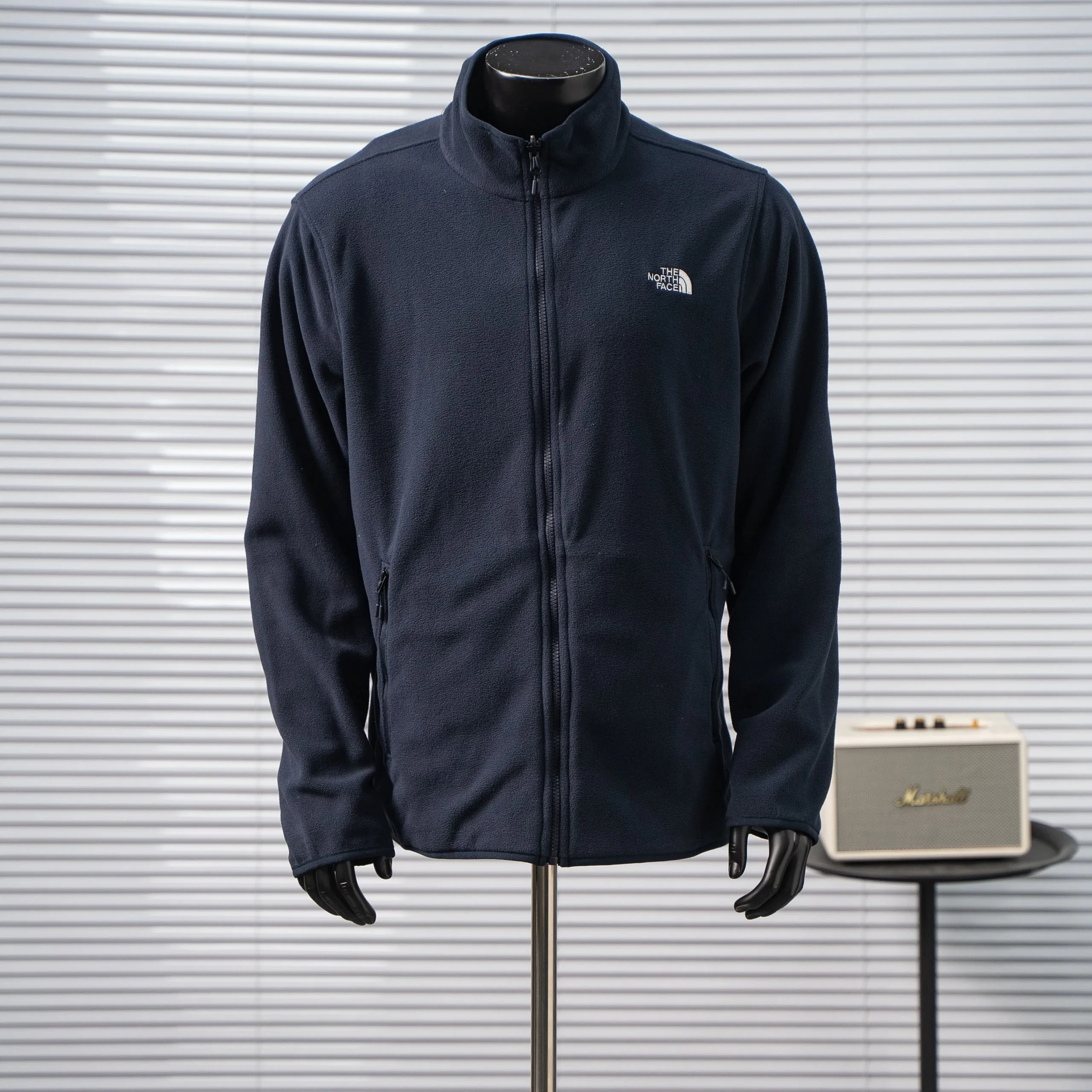 THE NORTH FACE - Down-filled V-neck Zip-Up Coat
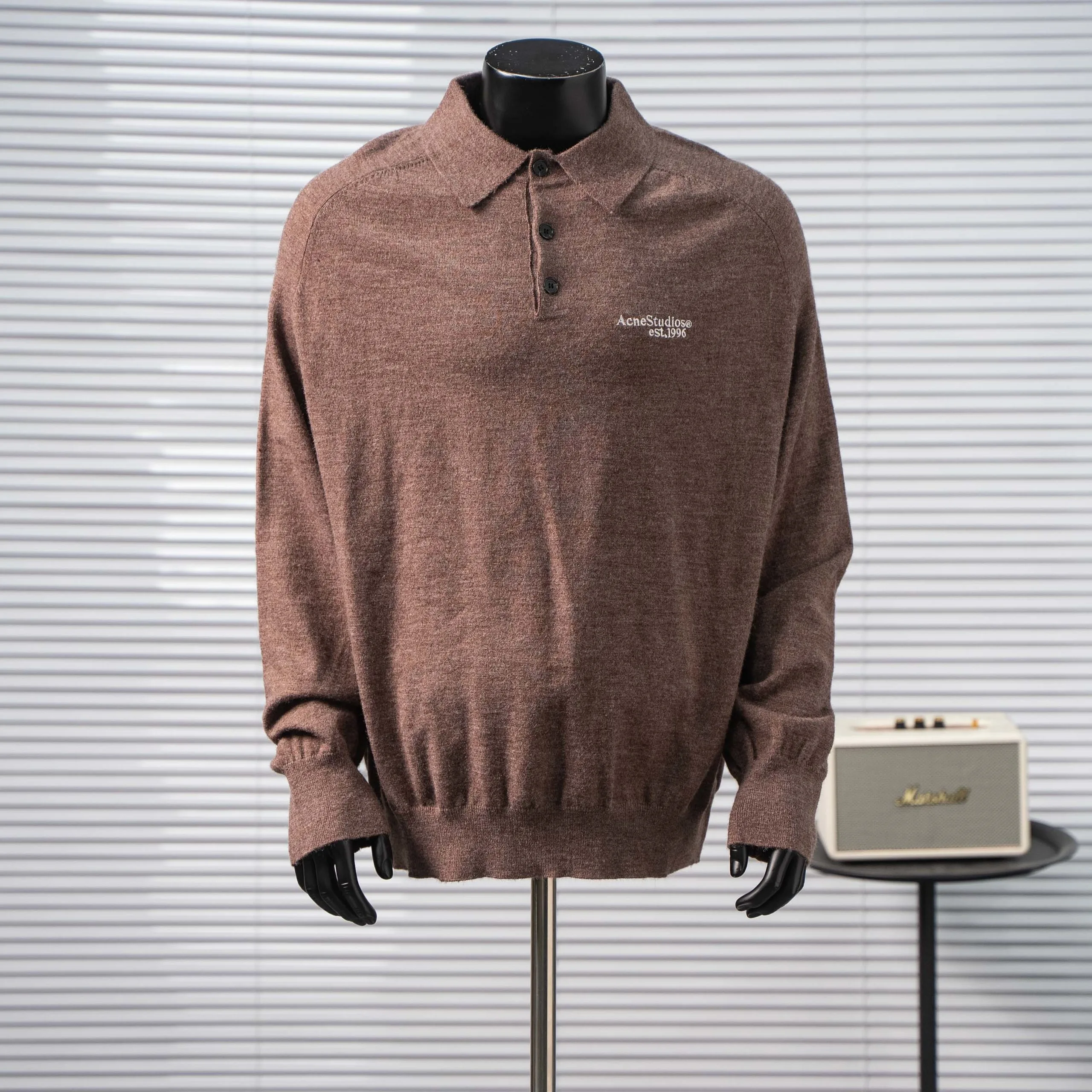 ACNE STUDIOS Small Logo Embroidered Knit Sweater Polo ShirtThis style is made from 50% wool and 50% alpaca wool. It is knitted using an imported Italian knitting machine to ensure that the fabric does not shed fibers and that the drape of the garment does not appear saggy. The alpaca wool has a hollow insulation structure, which is superior to ordinary wool in terms of warmth retention, while also having excellent anti-static and anti-shed properties. The woolen fabric gives the fabric excellent elasticity and drape, combining softness and comfort with a crisp and non-deforming texture, eliminating the bulkiness of traditional sweaters. The cuffs and hem are finished with high-density ribbing, which sets the shape and has a textured feel, preventing the fabric from shifting. In terms of the silhouette, this style follows an oversized and laid-back shape, with a length reaching the hips, providing high flexibility for body shape, and can accentuate the waist, abdomen, and shoulder lines. It retains the sharp lapel of a Polo shirt, breaking the monotony of solid-colored sweaters, and combines a sense of formality with a casual vibe. It combines Nordic minimalism and urban laid-back style. It is different from ordinary knitted garments in their casual nature, and also has a clean and restrained "Stockholm aesthetic", making it a core item for upgrading your style during the transitional season. Unisex style
 Moncler Hoodie with Feather Blending JacketGentle and noble lazy girl outfit ✨ Who knows! This lightweight blended jacket from Moncler is truly breathtakingly beautiful.