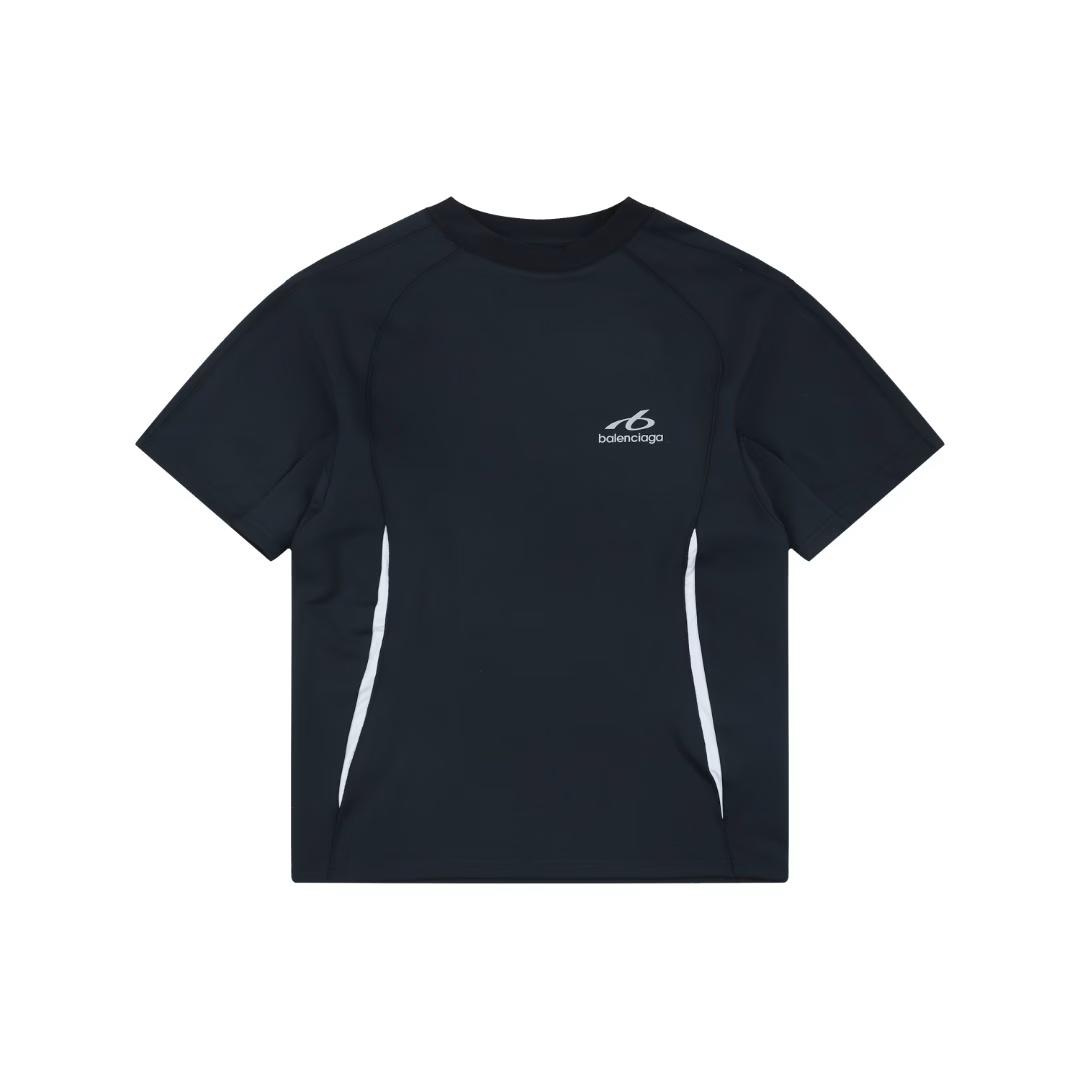
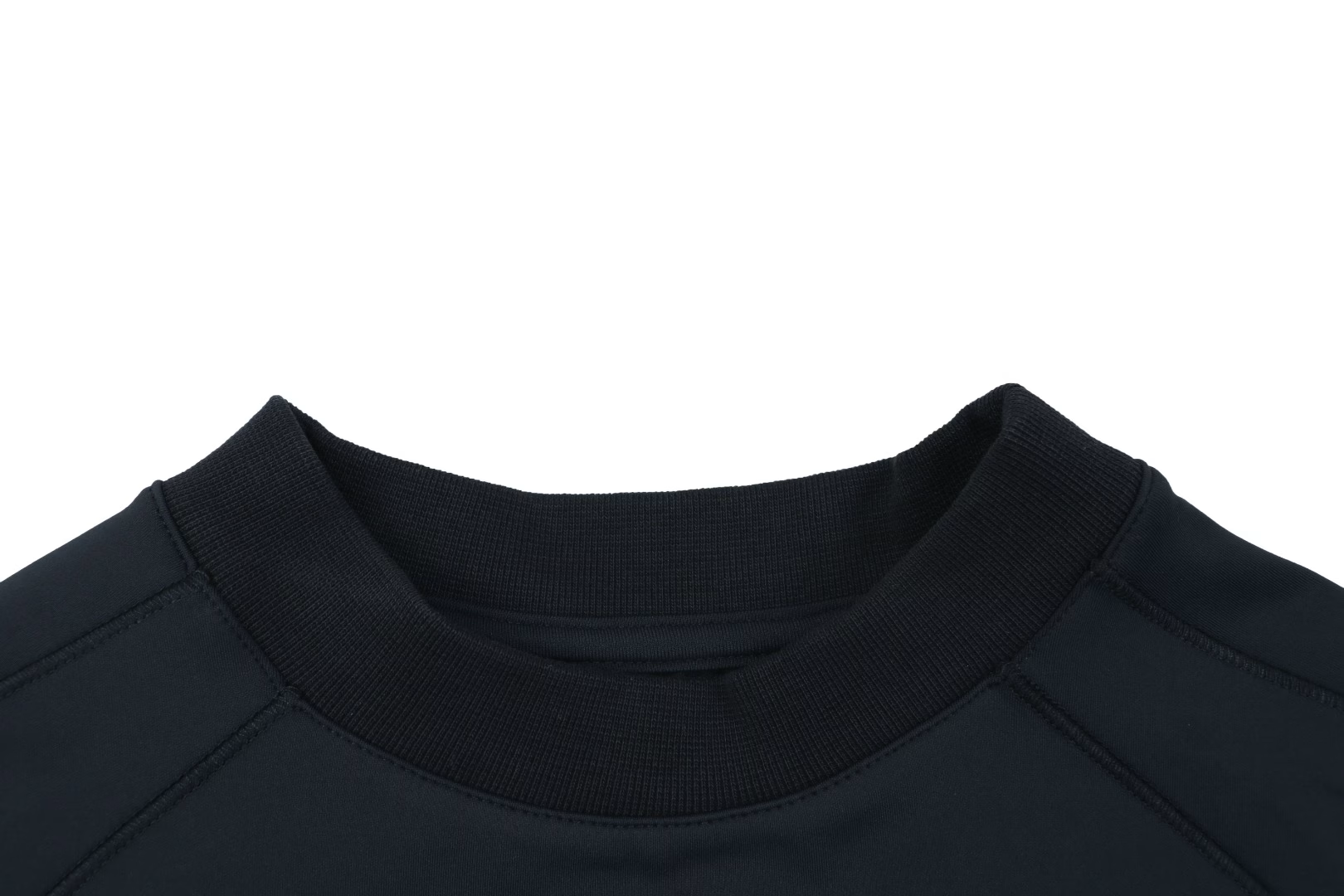
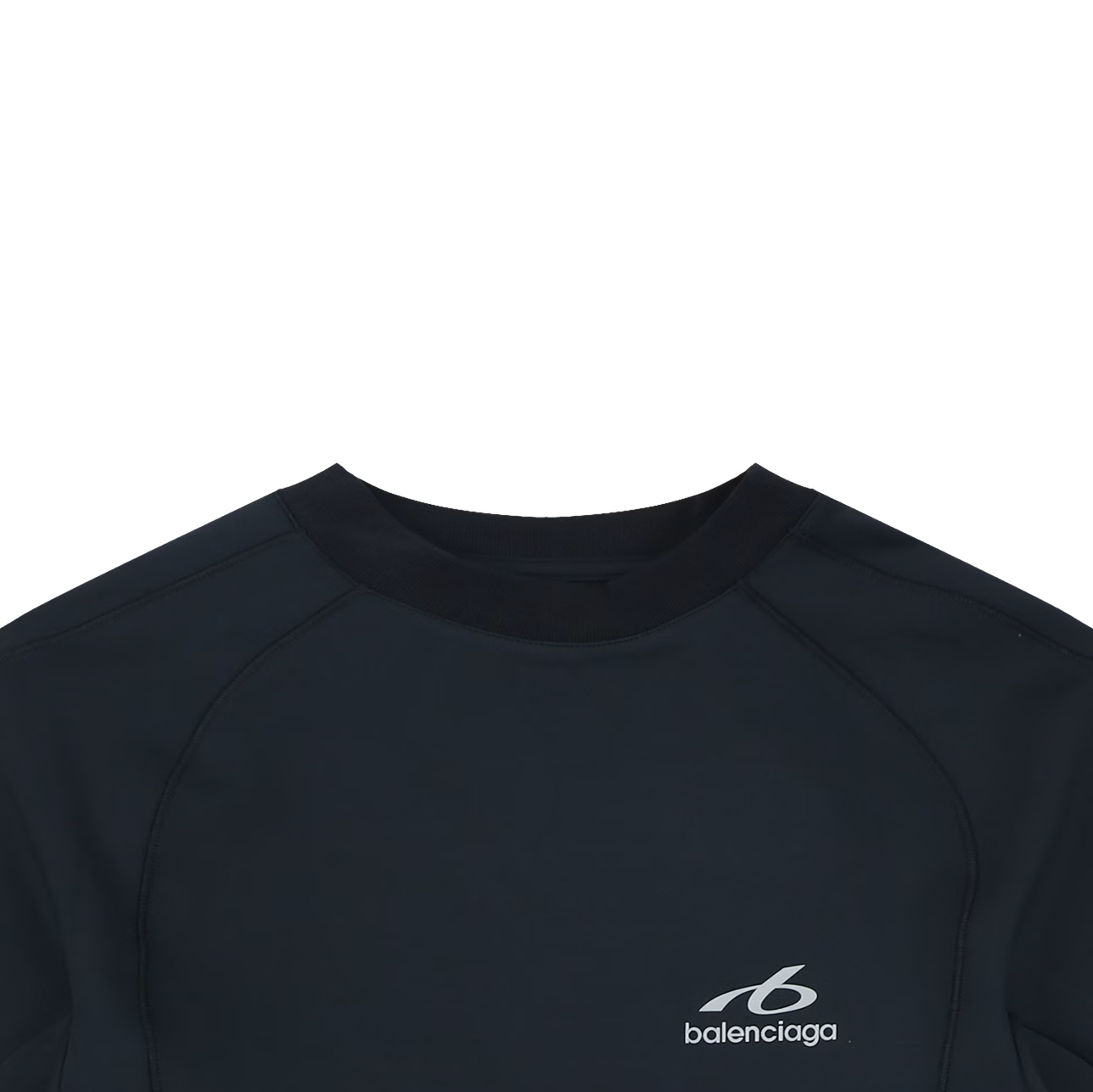
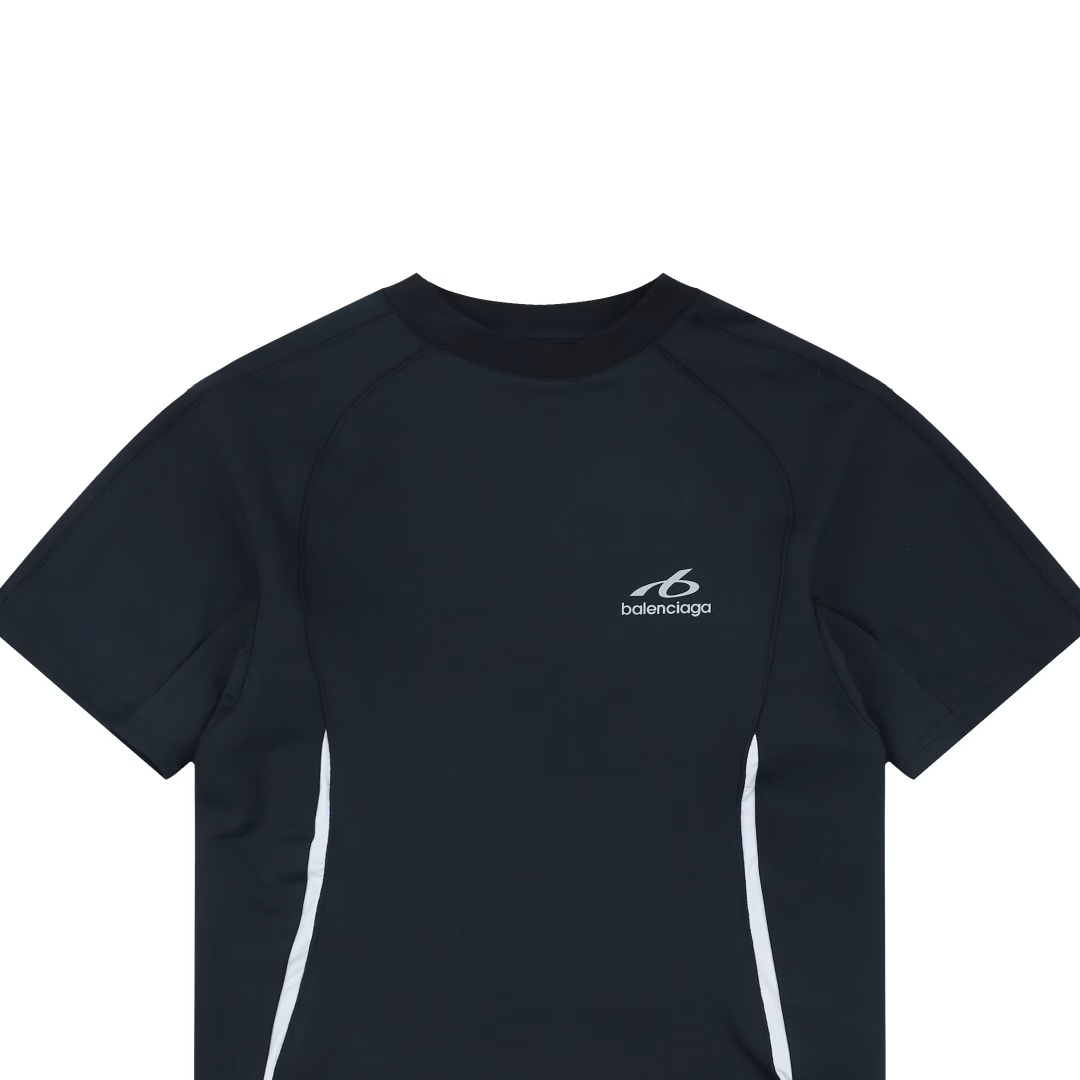
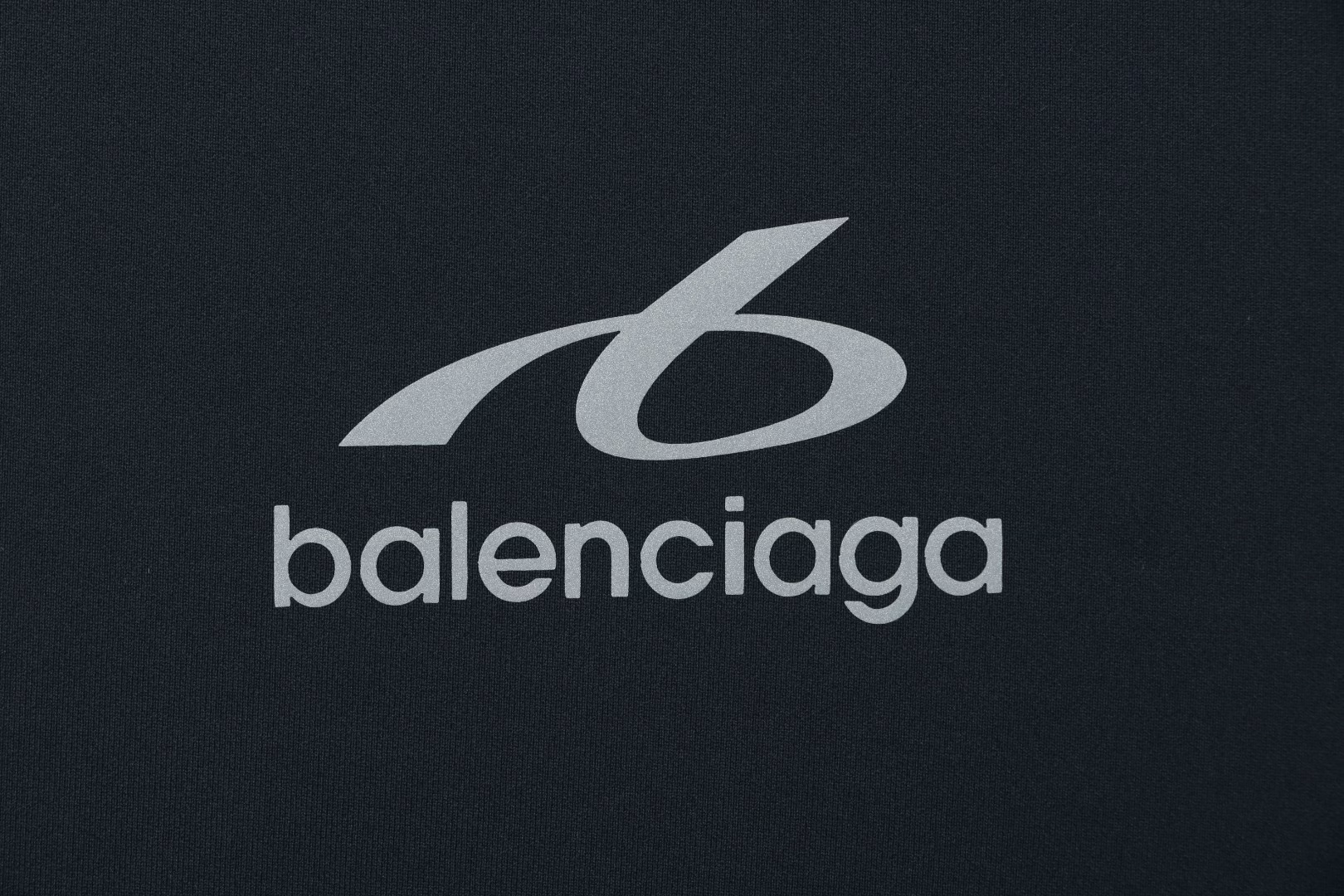
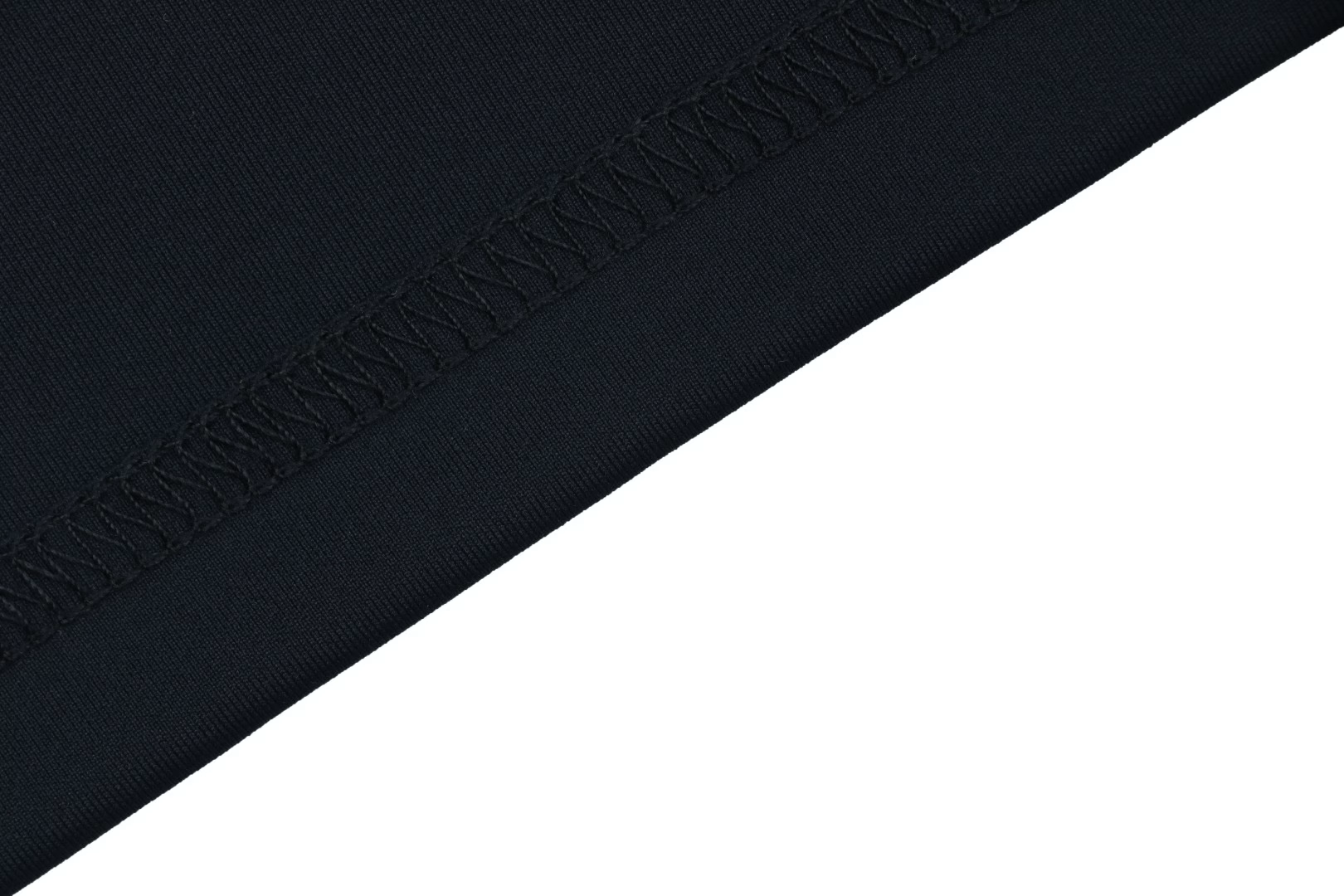
Balenciaga Side Stripe Anti-Halo Small Logo Quick-Dry Short SleeveThis short sleeve is a deconstructed sportswear garment. It breaks away from the conventional single-piece flat-cut T-shirt design. By relying on multi-piece three-dimensional division, unconventional patching, fabric properties matching, and point positioning control, a complex production logic is constructed. The pattern is subject to multiple technical constraints and is implemented in the final large-scale production. The pattern adopts diagonal shoulder-breaking deconstruction pieces, with the body and sleeve pieces divided diagonally. The shoulder-sleeve dividing lines fall onto the human shoulder socket and back scapular curved surface. The front and back pieces, left and right sleeve pieces, and side trim strips are all independent and irregular paper patterns. A regular T-shirt has only 2 to 3 pieces of fabric. The number of this pattern has doubled. Each piece of fabric has a different curve. The mirror tolerance of the left and right garment pieces must be controlled to the millimeter level. The pattern-making and test piece cycle is long, and the paper pattern layout loss is high. The base material is a directional moisture-wicking woven quick-dry fabric. The stretch difference of the warp and weft yarns is significant. Straight-cut and diagonal-cut drape and elasticity performance are different. The fabric is strictly divided by zone in the front body, sleeve piece, and side trim. The diagonal-cut of the sleeve piece reserves arm swing space. The straight-cut of the body maintains longitudinal drape. The fabric direction is chaotic, resulting in uneven left-right tightness and water-wash shrinkage. The fabric undergoes pre-shrinking and pre-treatment to prevent shrinkage and deformation after sewing. The process is complex, with the core difficulty being the vertical wavy color strips on both sides. The strips are in a continuous gradient curve, with the curvature changing continuously from top to bottom. There are no straight line segments. The cut pieces are hollowed out according to the curve, and the color strips are sewn along the curve. They cannot be pulled apart. The tightness of the stitching must be uniform. The arc radii of the left and right curves, the starting and ending points, and the inclination angle must be mirror-identical. The sewing tolerance is extremely low, and the labor time is long. The neckline is a small high-neck ribbed design. The elasticity matches the woven fabric of the body precisely, preventing sagging or tightness over time. The hem is arc-shaped and cut in a curved manner, with the end points precisely aligned with the end of the side trim. Any deviation will disrupt the visual balance. The diagonal separation seams and curve stitching seams of the entire garment are uniformly bound and locked. The width and thickness of the visible lines are uniform. The three-dimensional cut pieces, curve stitching, fabric direction control, point positioning, and accessory elasticity matching are all adapted. The garment shaping is a multi-stage interlocking process. A single point deviation will damage the overall three-dimensional sense and appearance symmetry of the garment. The entire process of pattern-making, cutting, sewing, and post-processing is strictly controlled, making mass production difficult and the complexity of the process far exceeding that of basic casual T-shirts.

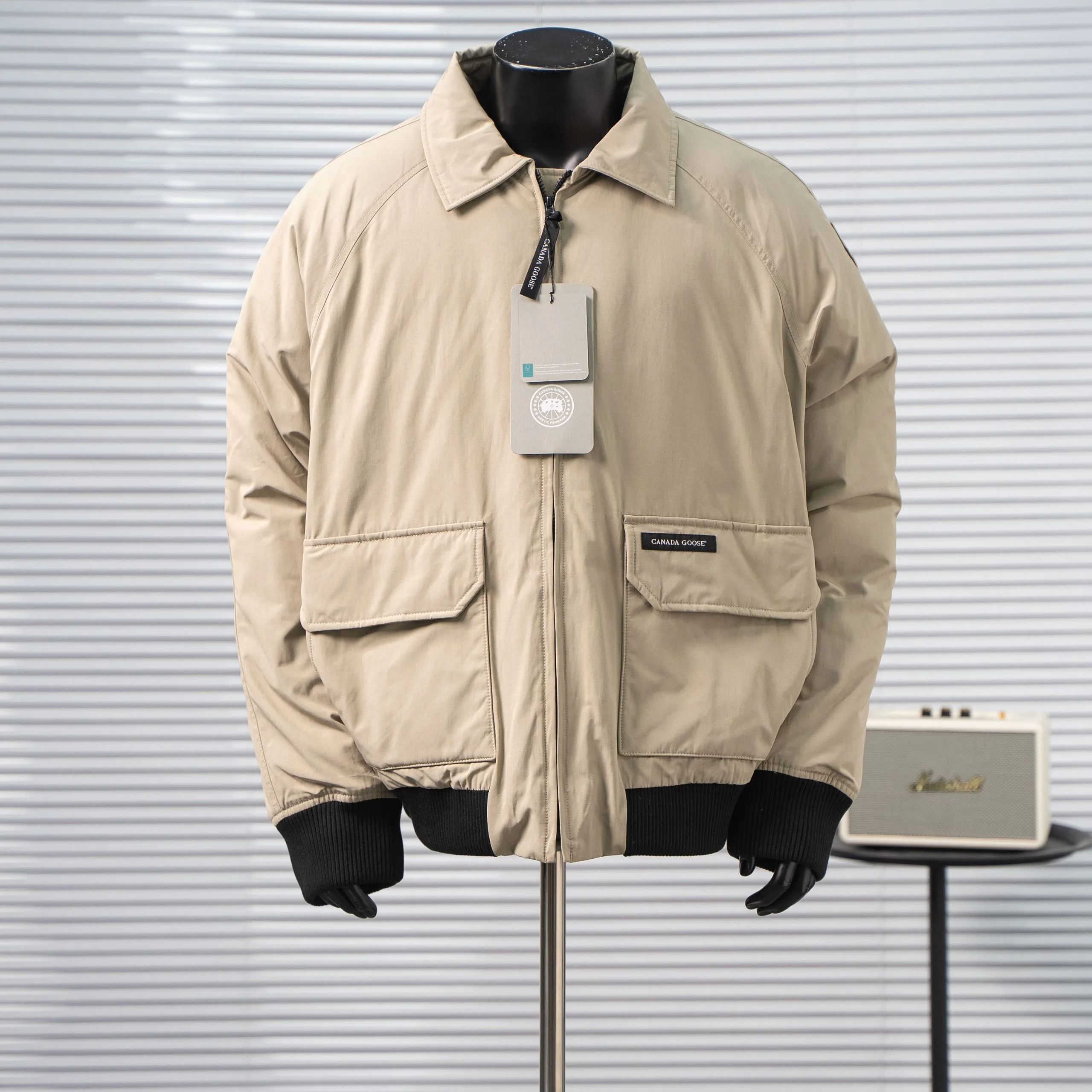 CANADA GOOSE (CG) Double-pocketed Logo Pilot Jacket Down CoatComposed of 83% polyester and 17% cotton, it is a scientifically blended fabric. It is woven with high-density plain weave, precisely controlling the yarn tension to create a firm and tight fabric surface. The finished fabric has outstanding tear resistance and wear resistance, with a dry and matte touch, and also offers both windproof and breathable properties.
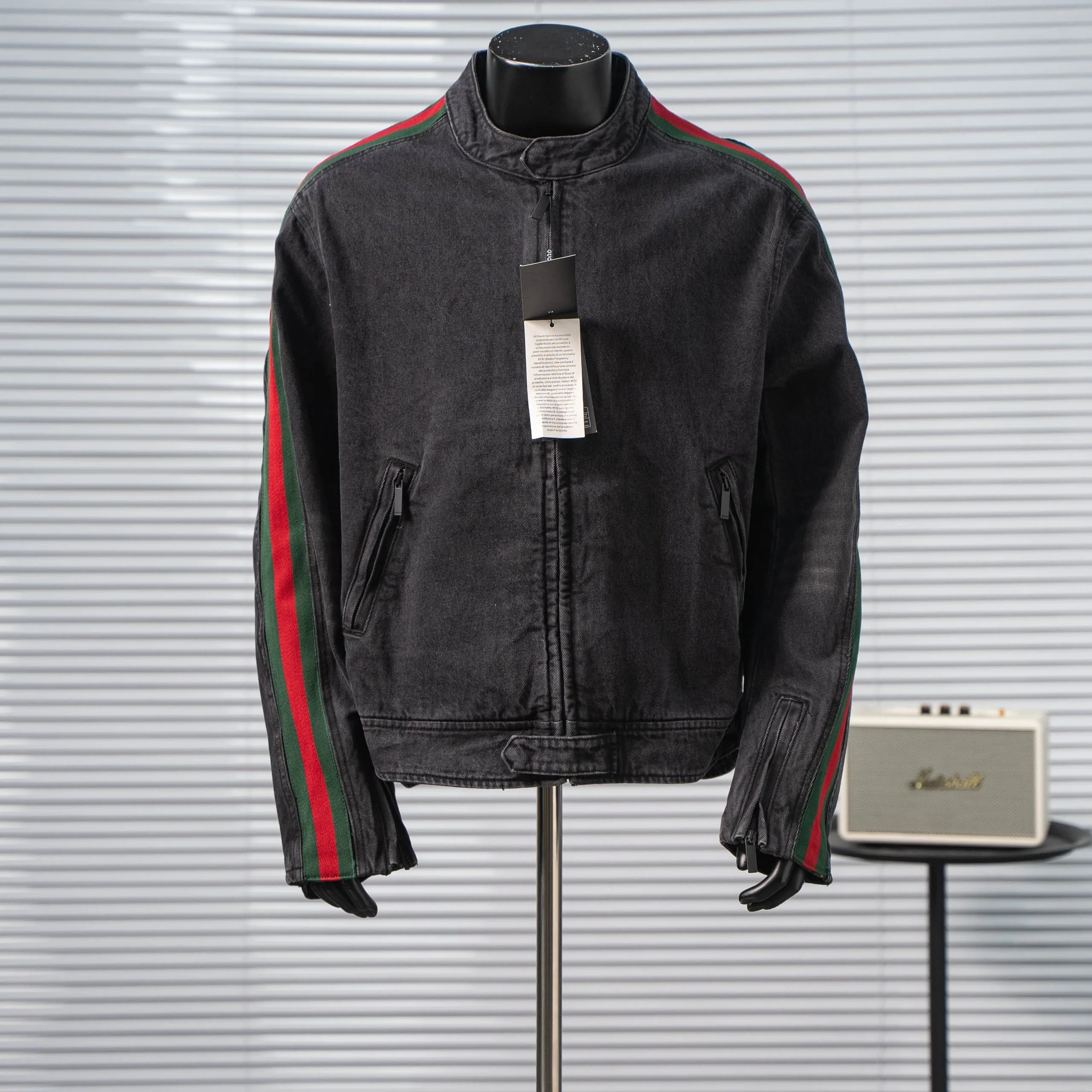 GUCCI GUC Red and Green Striped Leather Jacket for MenCustomized with hand-washing heavy-woven denim material, using template machine for bag opening, ensuring precise results. Combining brushing and creasing cat whisker techniques with gun-painting cat whisker techniques, hand-brushed in specific areas to achieve natural crease effect. Drawing out cat whisker-shaped textures, creating a visually stunning effect. Human body-sculpting three-dimensional cutting, with complex, cumbersome, slow production and high wastage. Stone-grinding light fermentation plus relaxation bleaching and softening. Through the combination of pulling and bleaching, the garment generates certain textures and stretching effects while undergoing bleaching. Using the salt-frying technique to cause the fabric to naturally fade and oxidize, creating a layered retro fading effect. Loose fit design
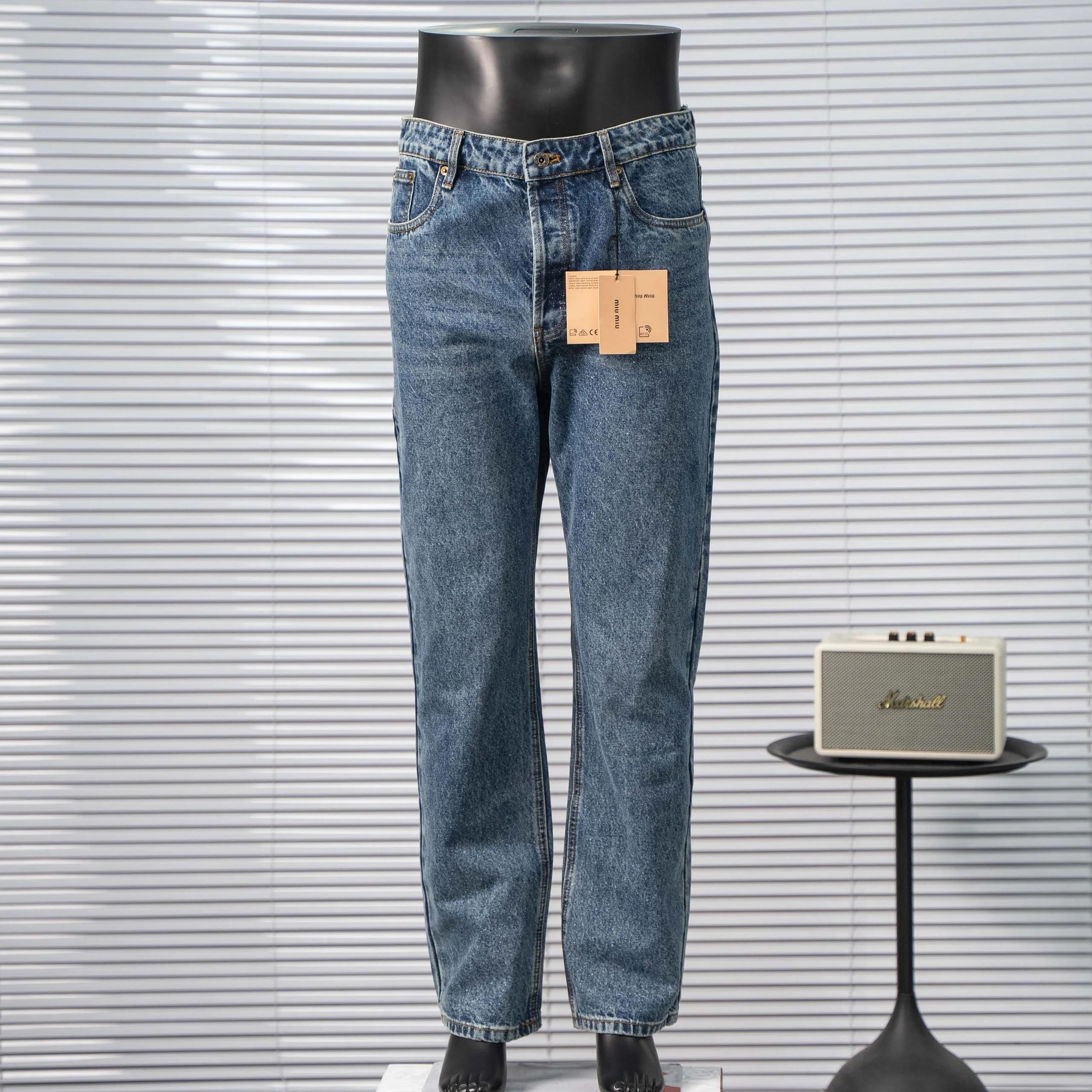 MIU MIU Miu Miu MM Flared Patch Embroidered Denim PantsCustomized with original sequence denim fabric from Chaoxu Li Jiwei, imported machine embroidery technique, with high precision and smooth, delicate lines. The combination of rubbing wrinkles cat whisker technology and gun-painting cat whisker technology, hand-embroidering specific areas to achieve a natural wrinkle effect, then using specific tools to draw out the texture of cat whisker shapes. Using multiple horses' mane + sand rubbing, specific parts are rubbed to achieve a local gradient effect. The workmanship is extremely complex, time-consuming and labor-intensive. The entire strip horse mane scanning spraying process is used to create a natural fading effect on the color of the pants. Then, the dyeing process of fading, stone grinding, and bleaching is carried out to achieve a uniform fading effect. Stirring like a snowball, stirring like salt, and then washing and drying to further fade and oxidize. Loose fit style
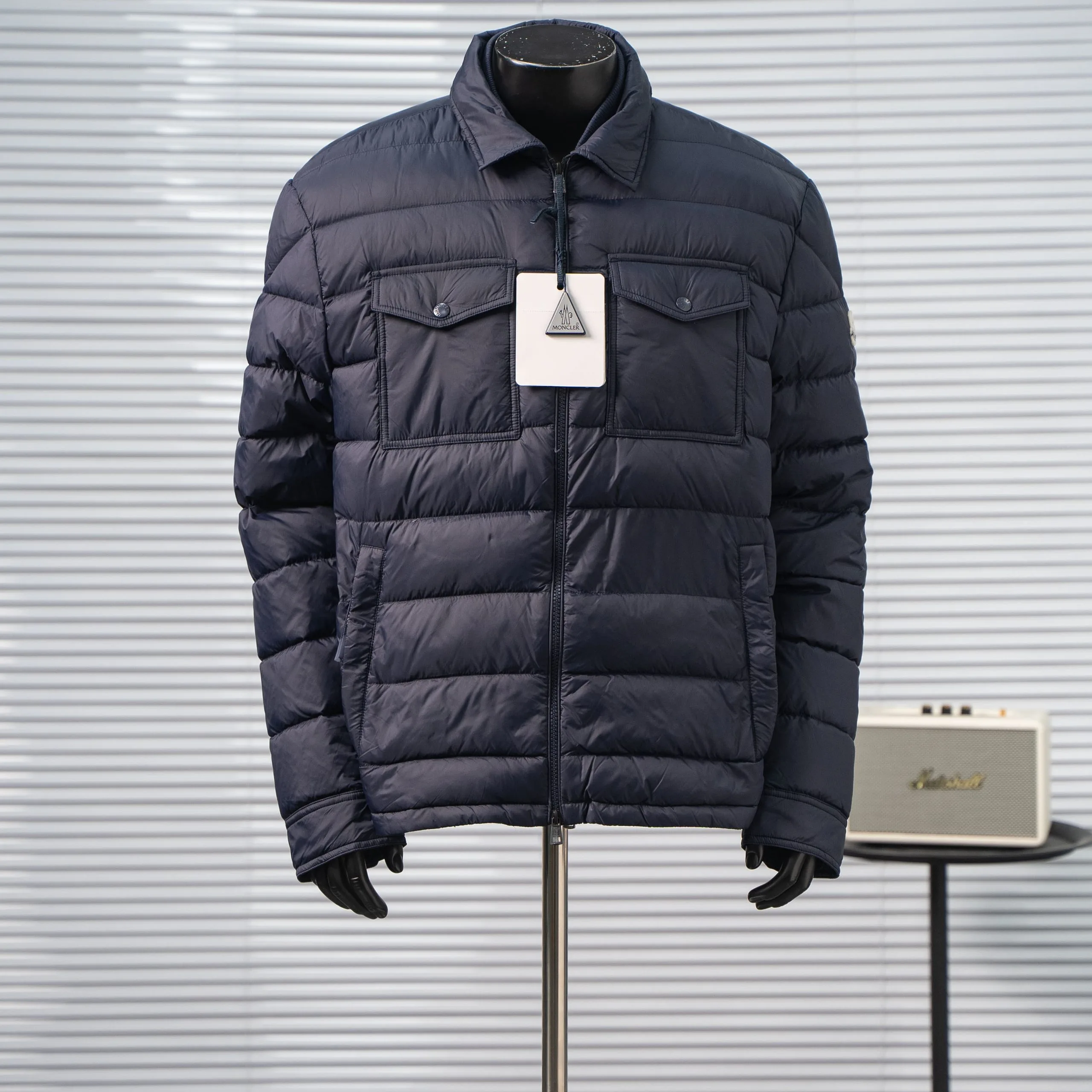 MONCLER MC Three-in-One Two-Piece Combination Down JacketThe fabric of the vest and the coat are both made of high-density nylon, with a fine and tight weave, and the fabric surface has a delicate matte texture. It feels soft and smooth, combining both flexibility and rigidity. The material itself has excellent tear resistance and wear resistance, and is not prone to damage from daily friction. It has excellent crease resistance and does not easily form stubborn wrinkles after slight rubbing. At the same time, it has good windproof performance, which can prevent cold air from penetrating and protect the temperature locked by the down inside.
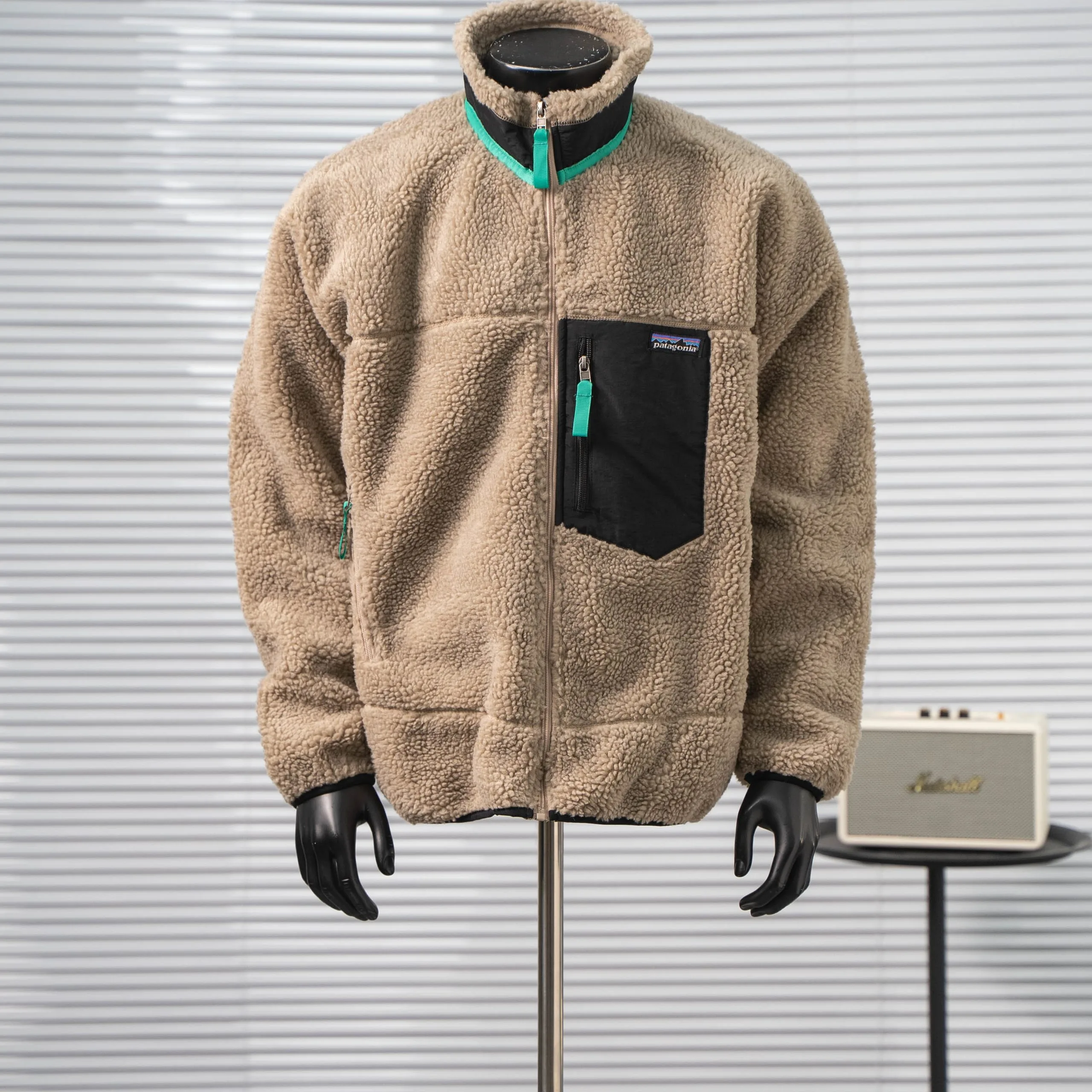 Patagonia Sheepskin Coat with Chest Pocket
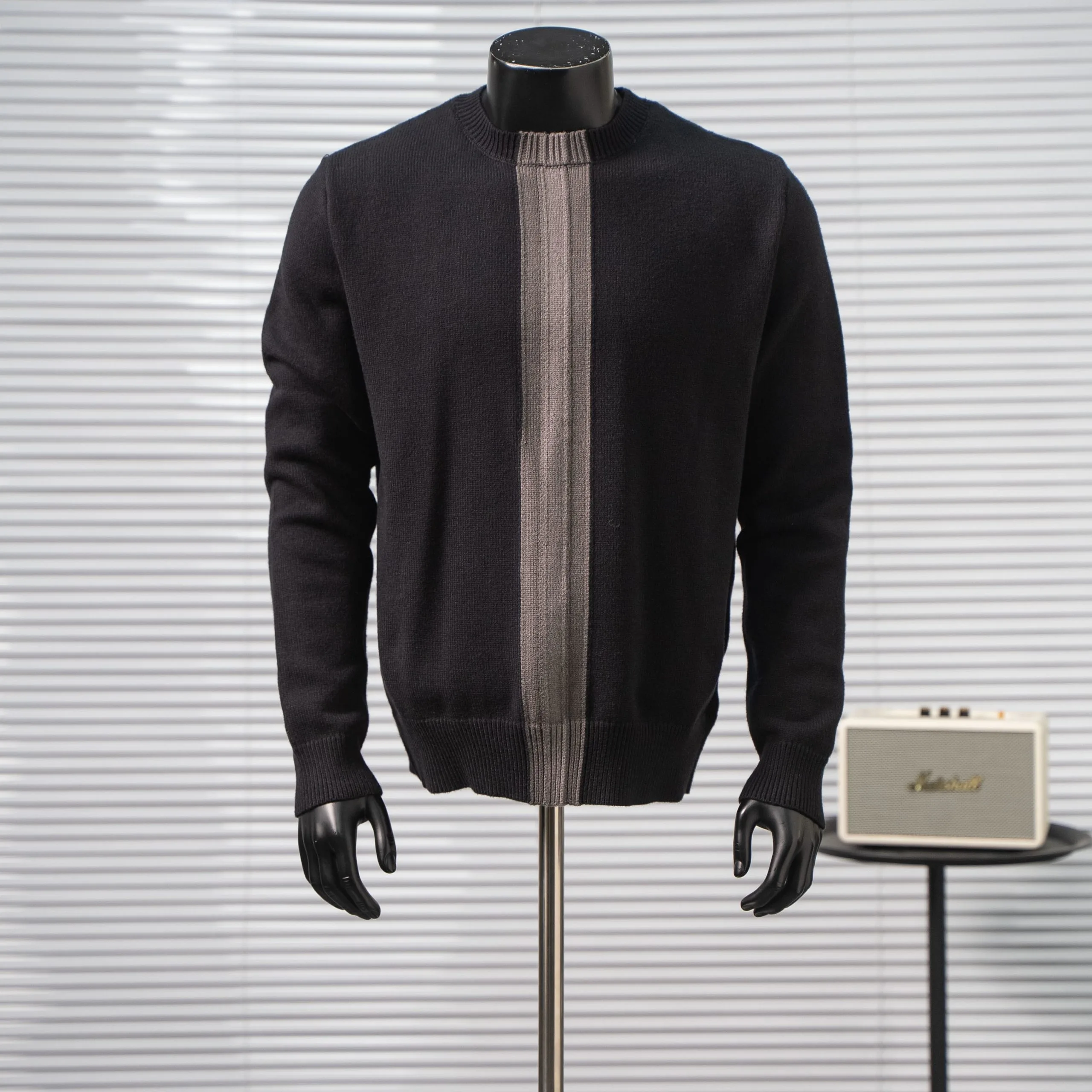 Gucci Striped Knit BlouseThe fabric is made of 35% wool, 55% cotton, and 10% nylon. The jacquard pattern is created using a multi-needle loom, with the brand's design-style stripes serving as an embellishment. The garment undergoes washing - removing wool impurities - color fixation - shaping stabilization - and adding texture. The Gucci Primavera collection, by blending innovation and a pragmatic vision, has established new vocabularies for silhouette, texture, and materials. The men's items inherit the brand's classic designs and iconic logos, and are crafted with exquisite craftsmanship to provide a light and comfortable dressing experience. This sweater is made of fine knitted wool and features understated lace details.