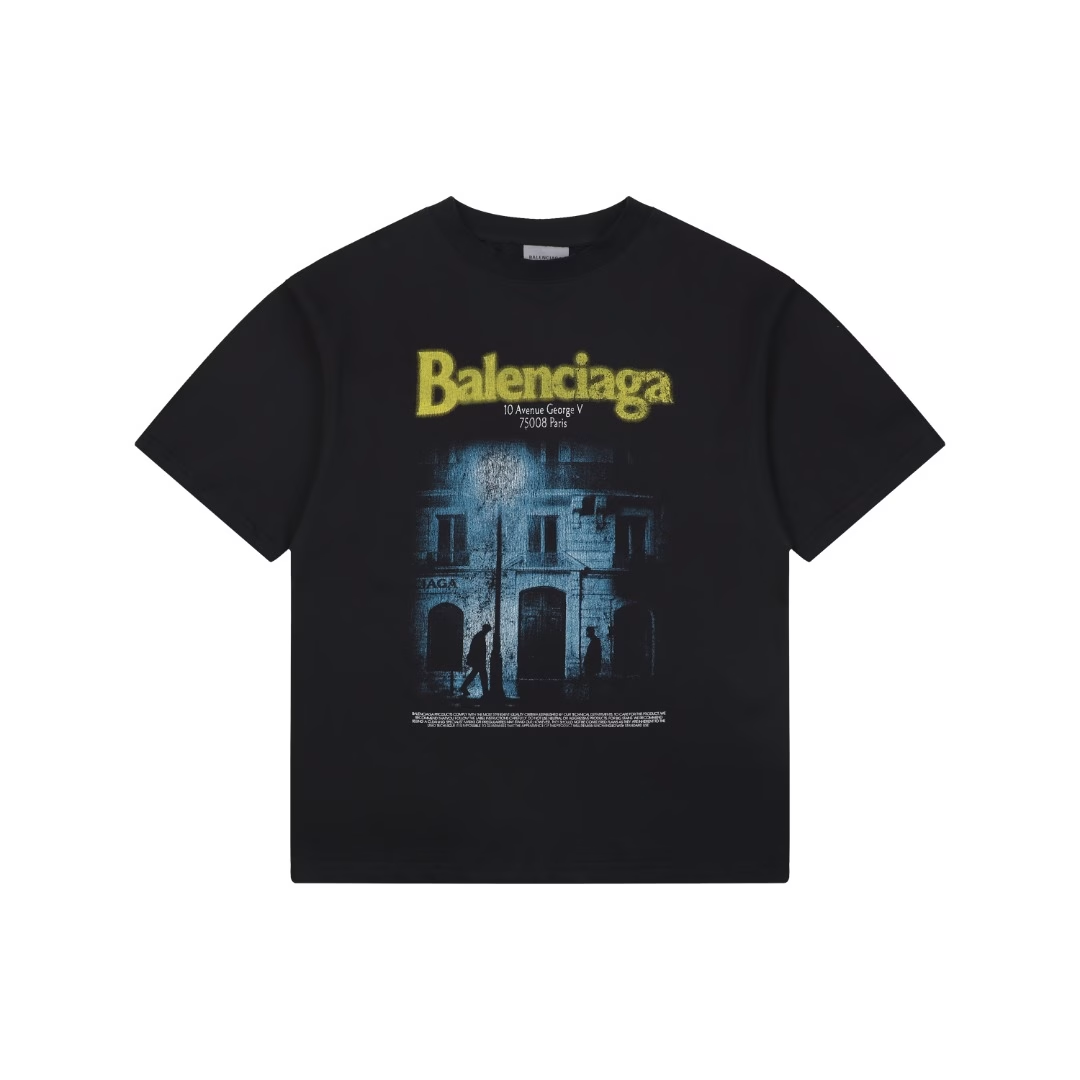
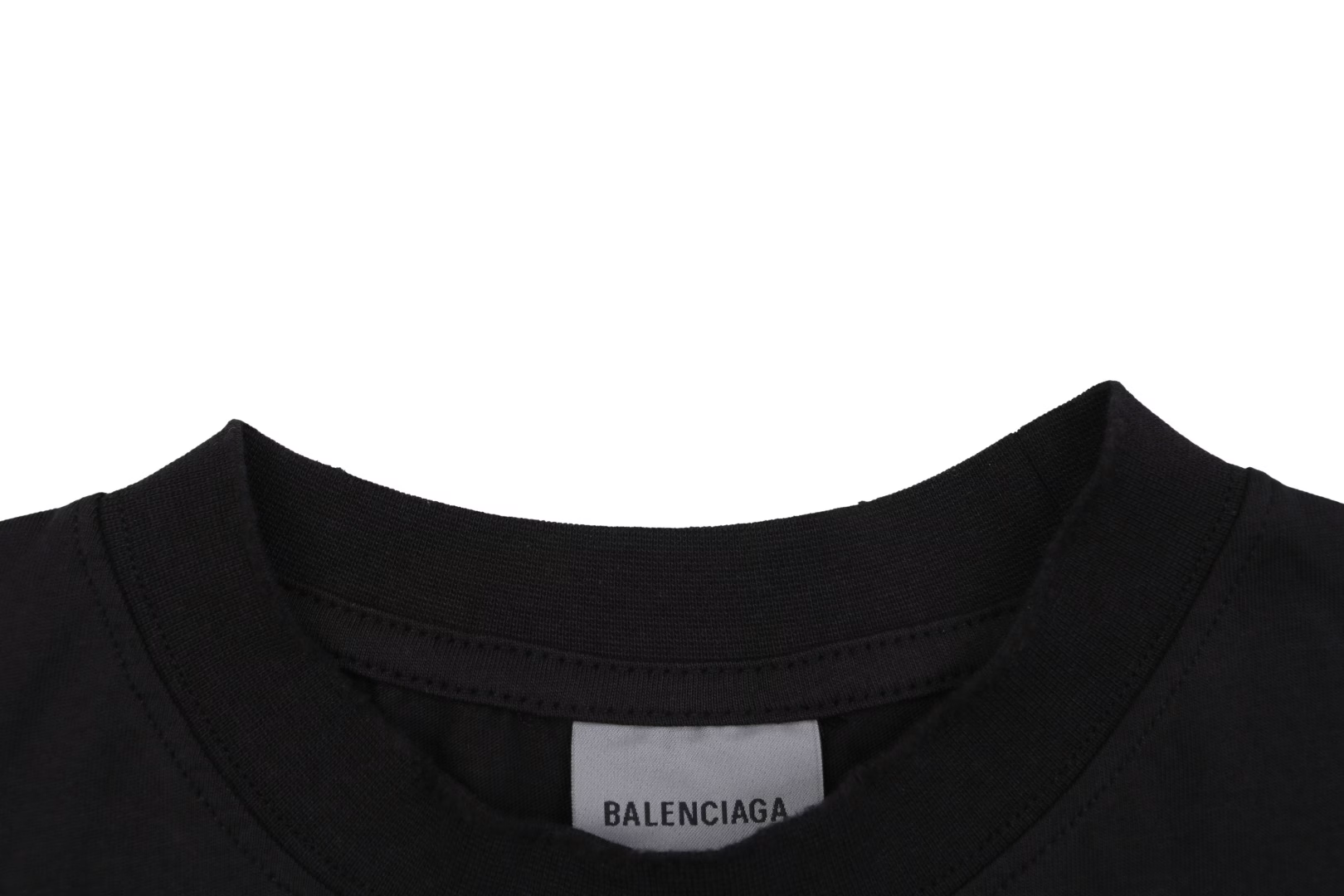
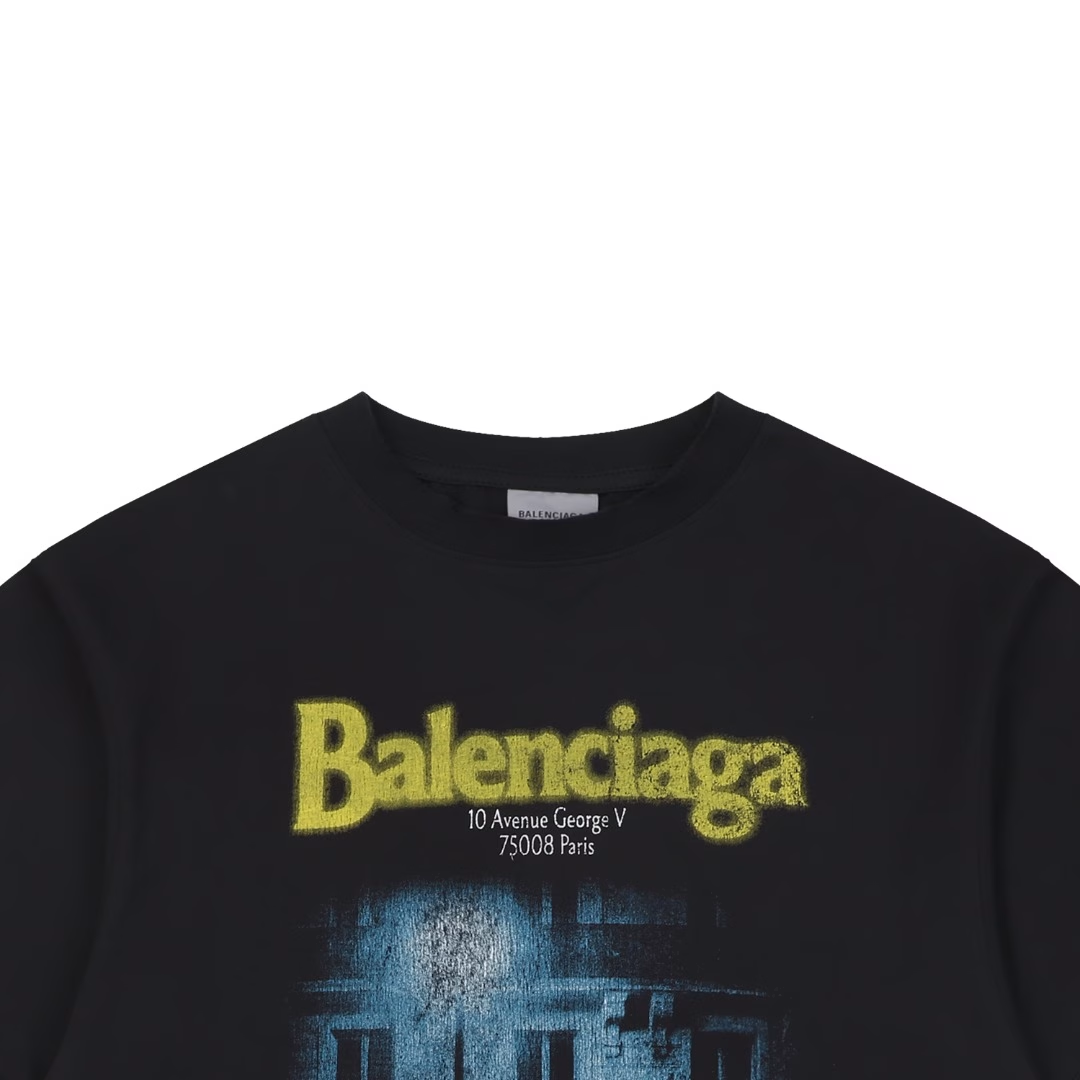
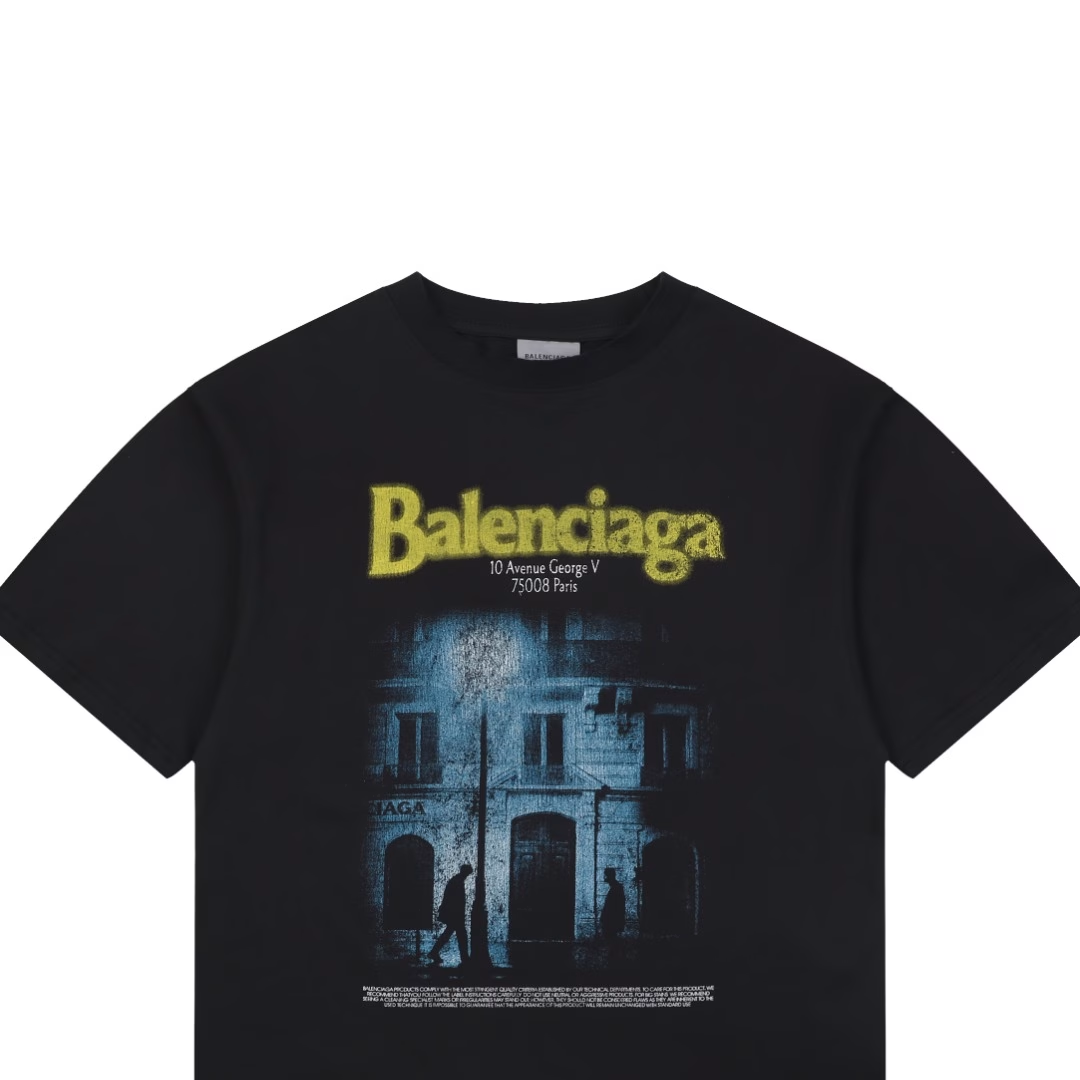
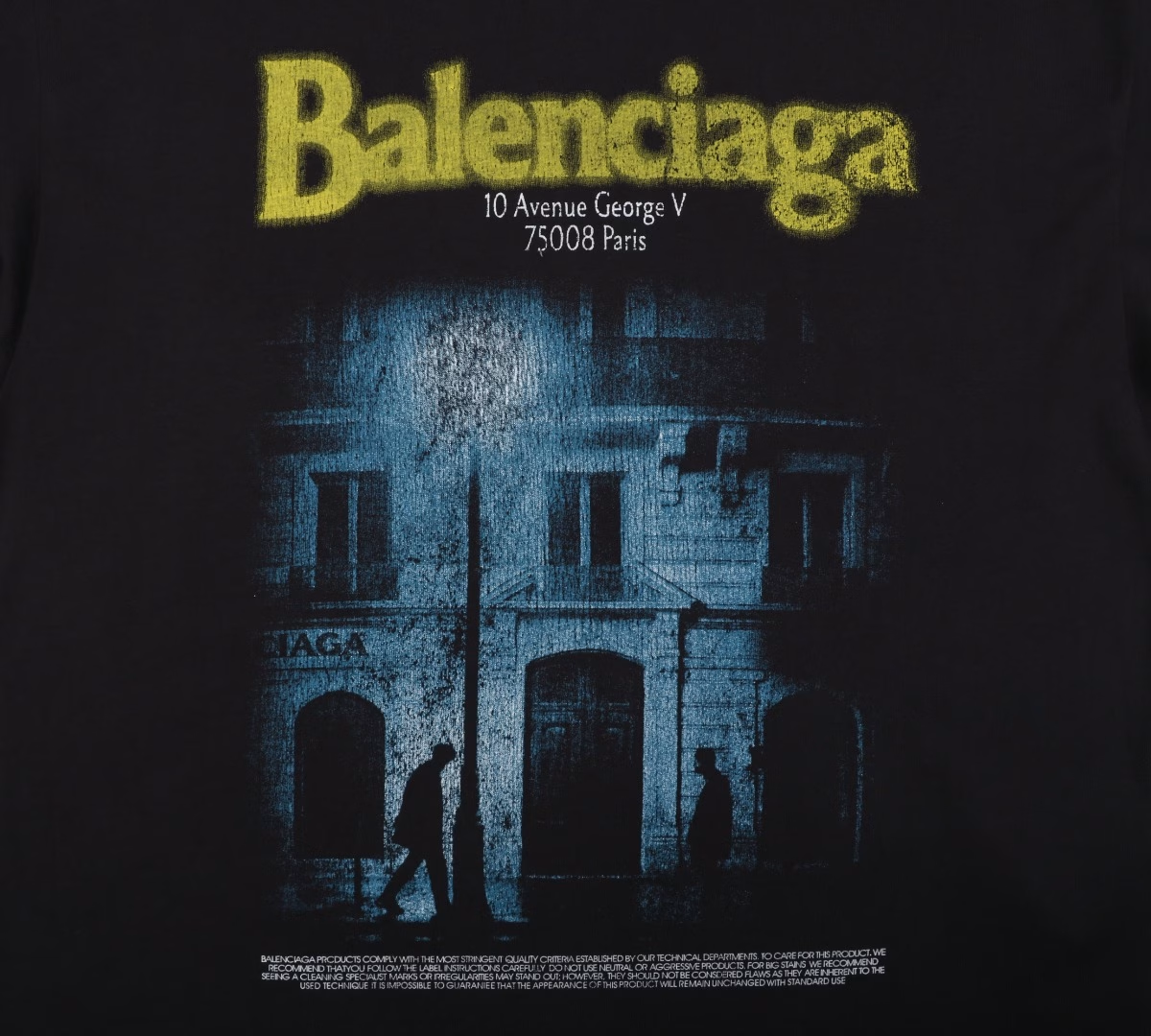
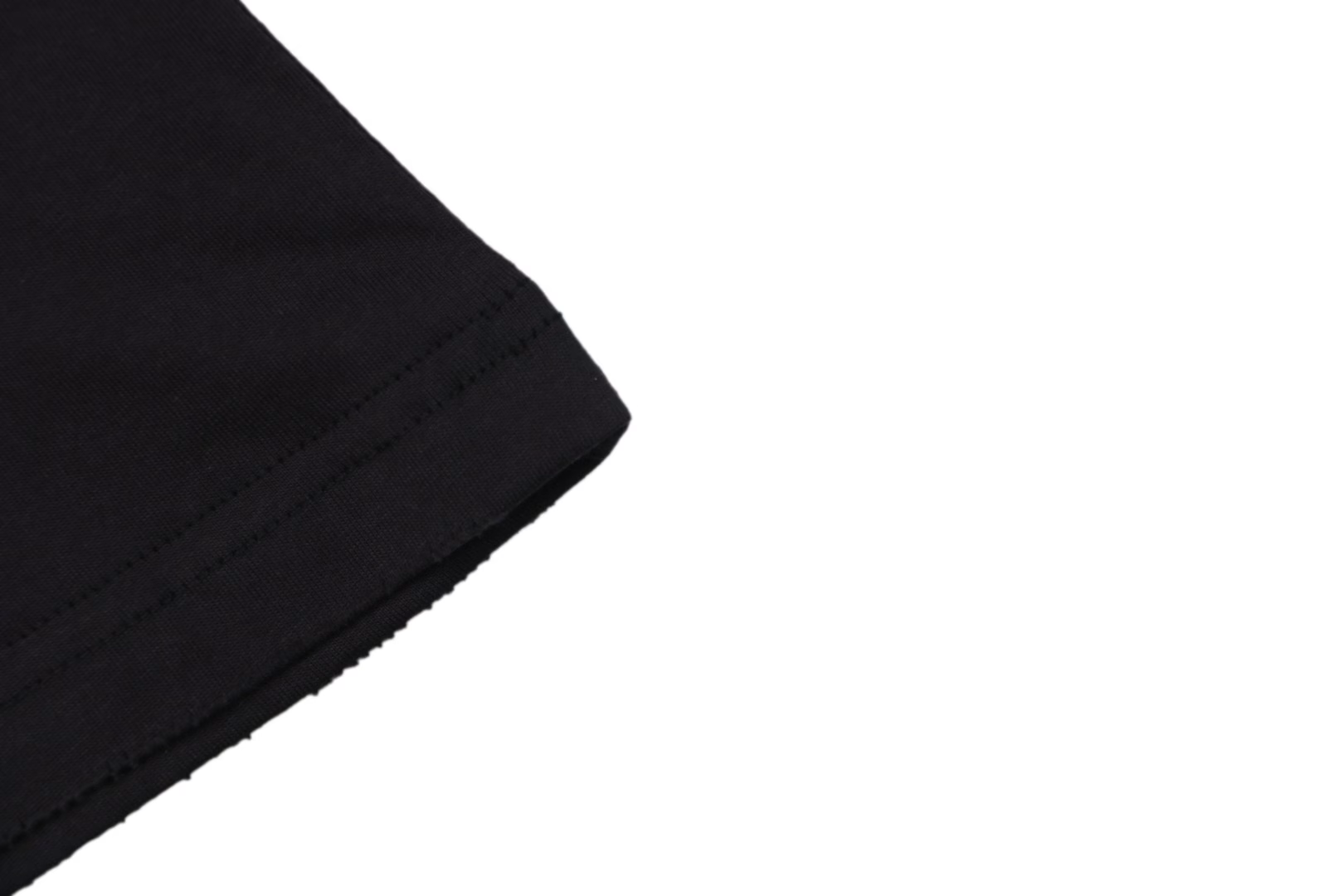
Balenciaga Street Shadow Print Short SleeveThis piece is created based on the core stores as the creative platform. It integrates retro film photography aesthetics, high-end layered printing technology, and garment finishing water-washing techniques. The entire production process is complex and the details are strictly controlled. It is a highly sophisticated and high-quality streetwear garment with an extremely high technical threshold. The fabric used is custom-made heavyweight water-washed cotton, which undergoes pre-shrinking, stress release, and sand-washing softening processes. These steps optimize the fabric texture structure, reduce the probability of shrinking and deformation, and create a matte and foggy retro texture. The fabric density is uniform and solid, balancing the drape and stiffness of the garment, providing a stable attachment surface for large-scale layered prints, ensuring the long-term regularity of the garment's shape. The core difficulty lies in the retro film-style multi-layer color separation artistic printing. It eliminates ordinary single-color screen printing and adopts multi-channel film color separation plate-making. It accurately reproduces the architectural outlines of the store at night, the silhouettes of pedestrians, and the layers of road light shadows. Through multiple processes such as particle noise accumulation, blue tone color gradient, font wear and aging, and dark area smudging and blurring, it recreates the grainy and mottled texture of old film. The picture has rich light and dark layers and natural color transitions. The print uses low-temperature multi-layer glue paste overlay and solidification. The glue layer is thin and uniform, without hard accumulation, and takes into account breathability and washability. After garment water washing, it remains firmly attached without peeling. The garment shape retains the brand's iconic deconstructed relaxed cut, precisely regulating the length, shoulder width, and circumference ratio. Through three-dimensional arrangement and point-saving techniques, it shapes a relaxed yet not sloppy broad silhouette. The neckline uses high-elasticity reinforced ribbing and double-layer edge finishing, effectively preventing sagging from long wear. The hem and cuffs use dense overlock stitching, with uniform and neat stitching, and the cutting piece alignment error is strictly controlled within the millimeter level. After the garment is completed, it undergoes multiple processes such as fine ironing, texture correction, defect screening, and secondary aging and shaping. These processes weaken the traces of industrial mass production. From fabric modification, pattern color separation plate-making, multi-layer artistic printing, to three-dimensional shape shaping and garment finishing, the process requires high manual intervention and high loss rate. Custom accessories have three standards.

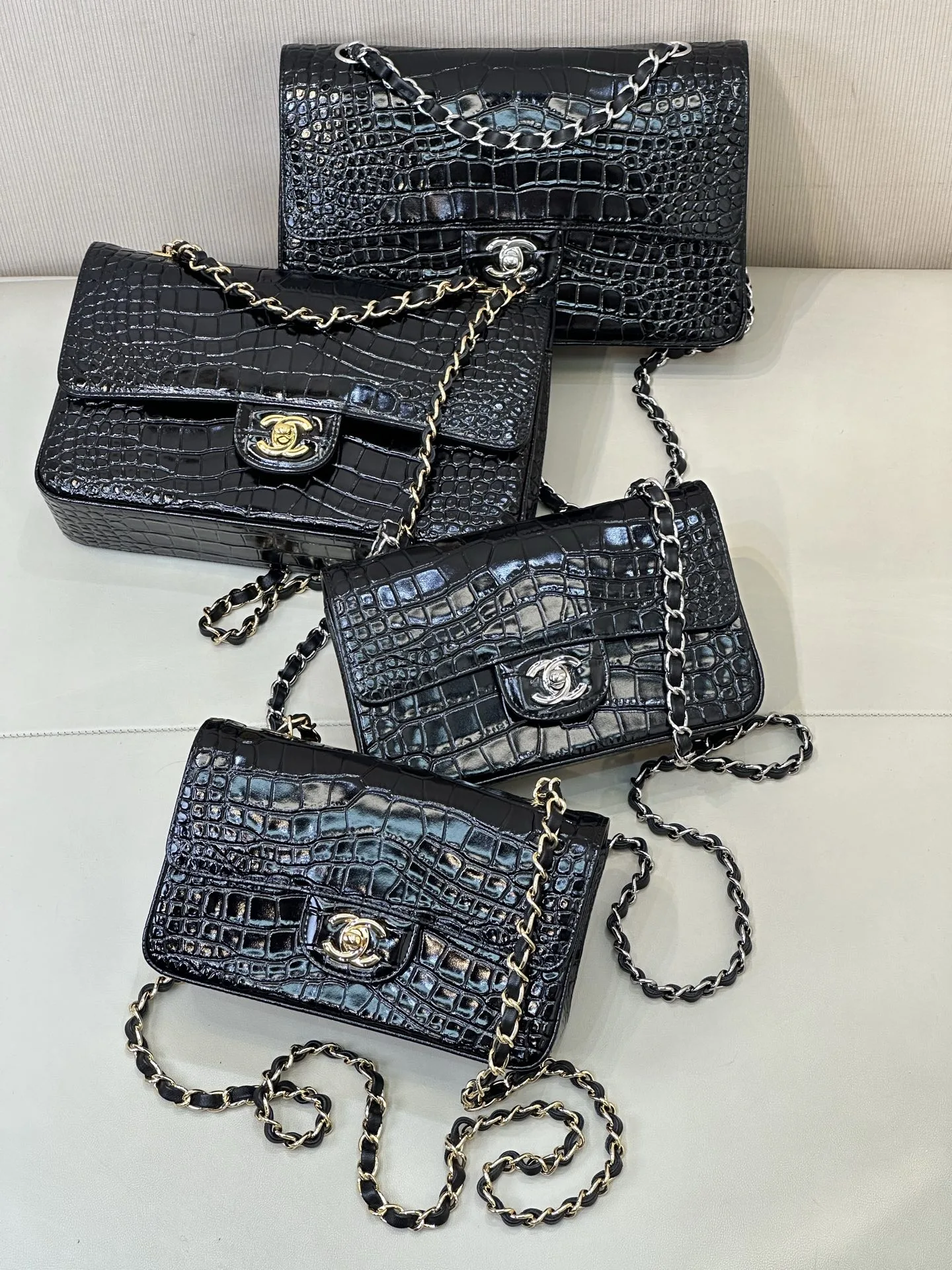 Forbidden God Crocodile Embossed CF! The luxurious feel is absolutely outstanding!The classic CF flip cover design, the glossy crocodile embossing is highly recognizable, extremely elegant and sophisticated, exuding a retro princess vibe.The leather is a glossy polished cowhide, with clear and three-dimensional crocodile texture, with varying depths of the patterns, the luster under the light is amazing, it's not just plain and flat, but has a very textured and transparent luster.
 Winter and autumn atmosphere ceiling, gentle and retro, perfect for taking stunning photos.
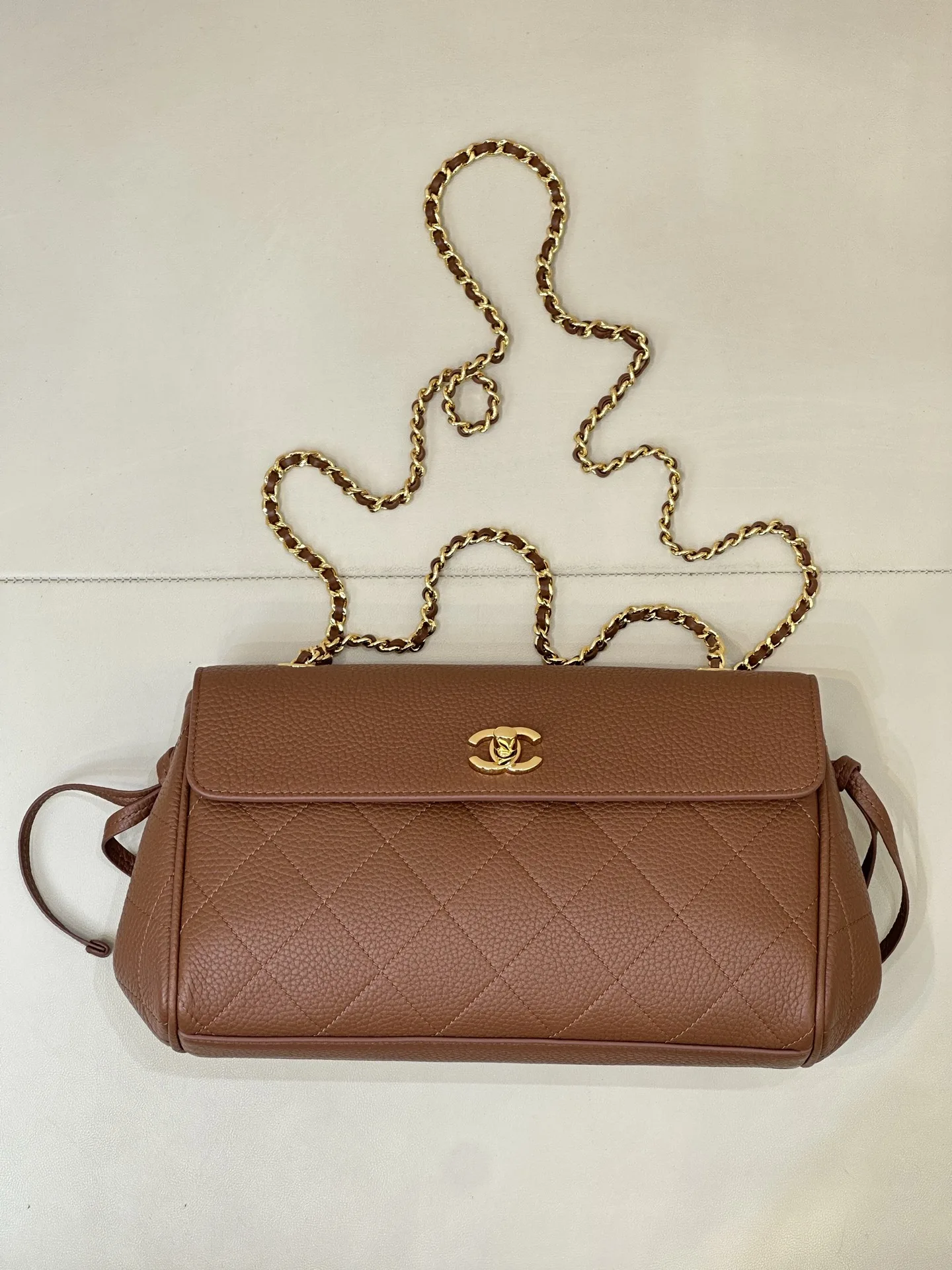
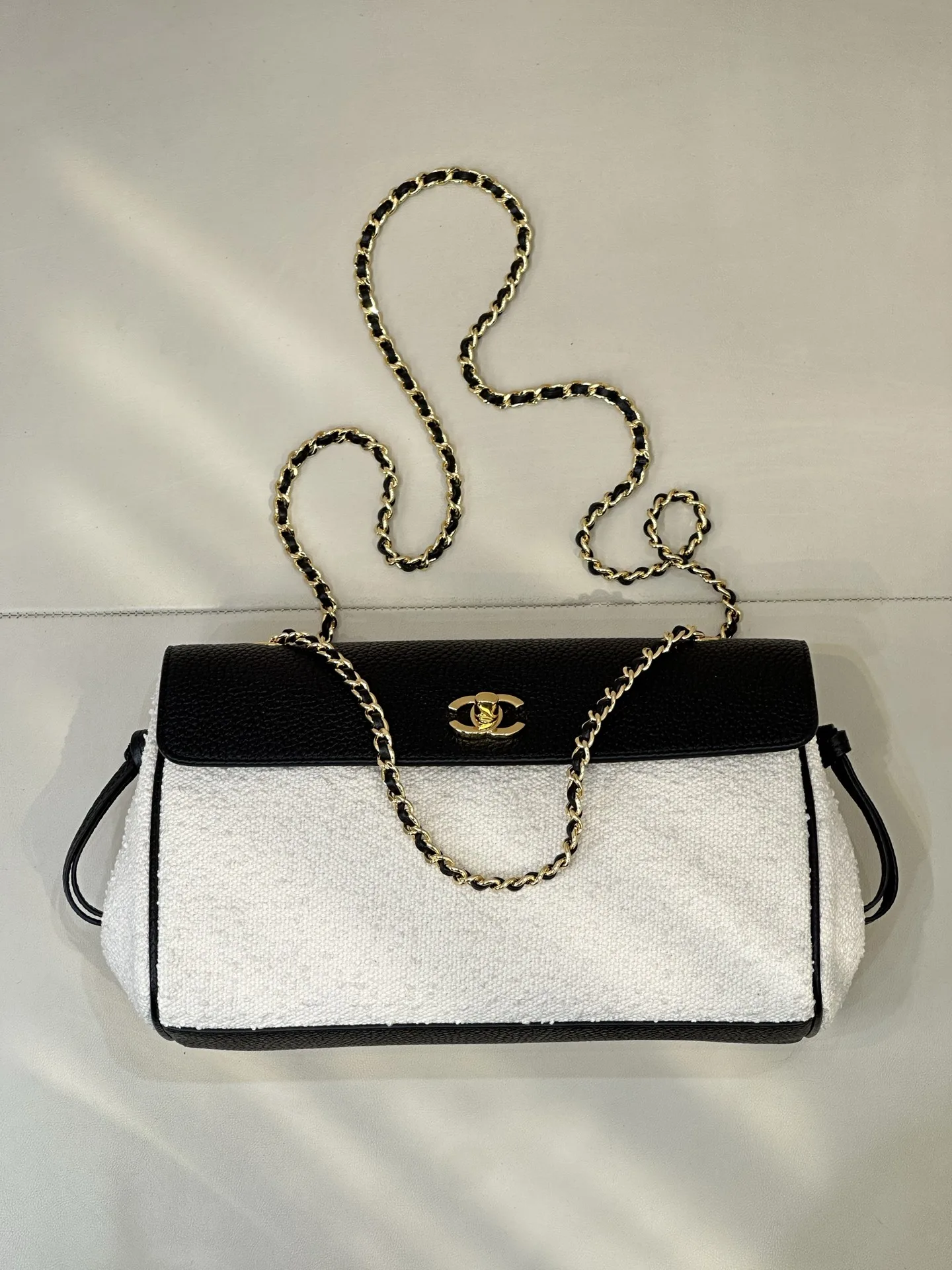 Chanel 26B Autumn/Winter Drawstring Rectangular Underarm Bag - The retro vibe is absolutely overwhelmingThis is a must-have, gentle and popular item for the autumn/winter season. With its relaxed and elongated bag shape, it has a retro filter effect. It is suitable for commuting, shopping, and afternoon tea. It has both practicality and aesthetic appeal.
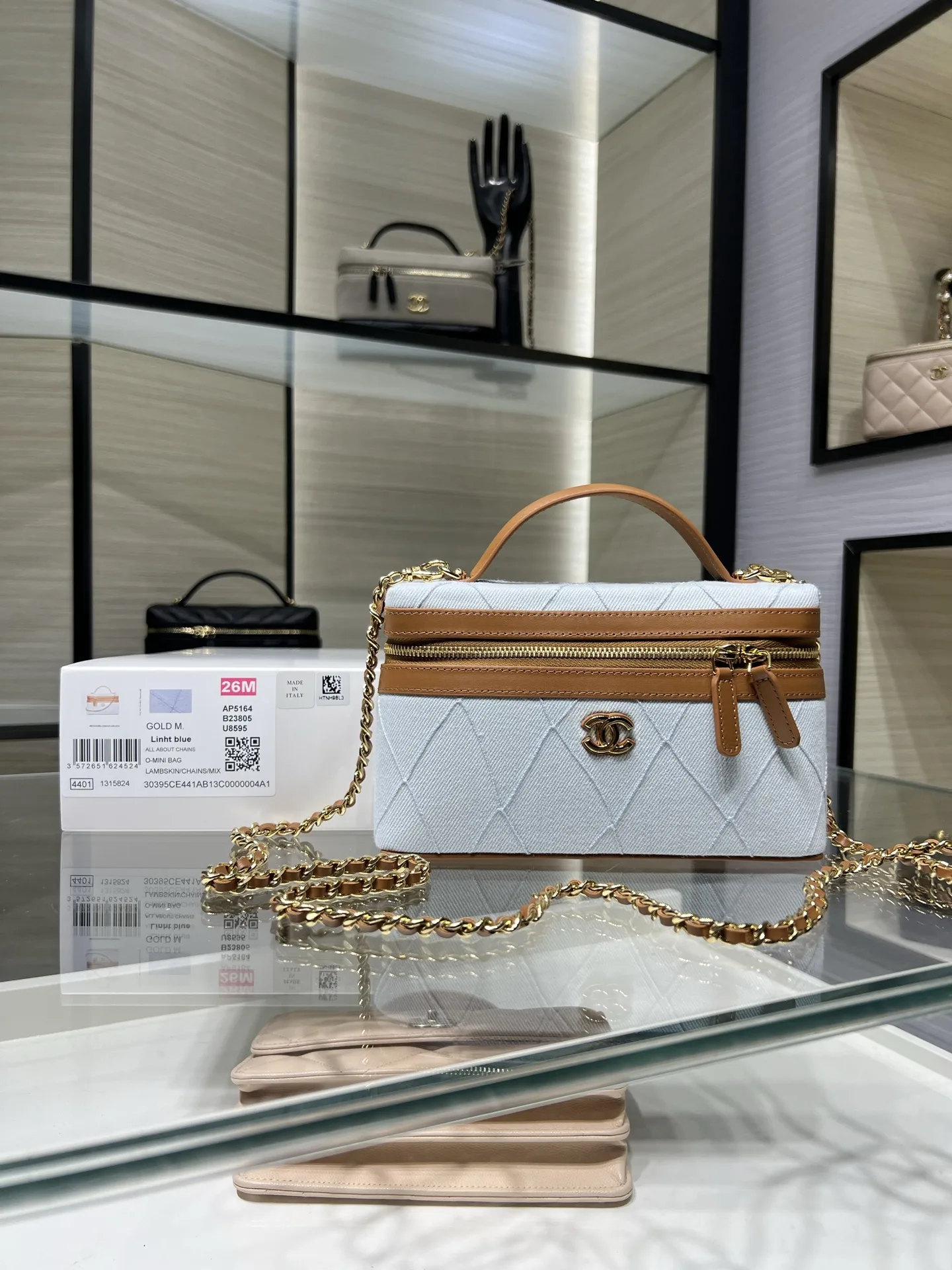 Ohanel 26M New Cocobeach Beach Collection🏝️ Denim embroidered grid LP with cowhide
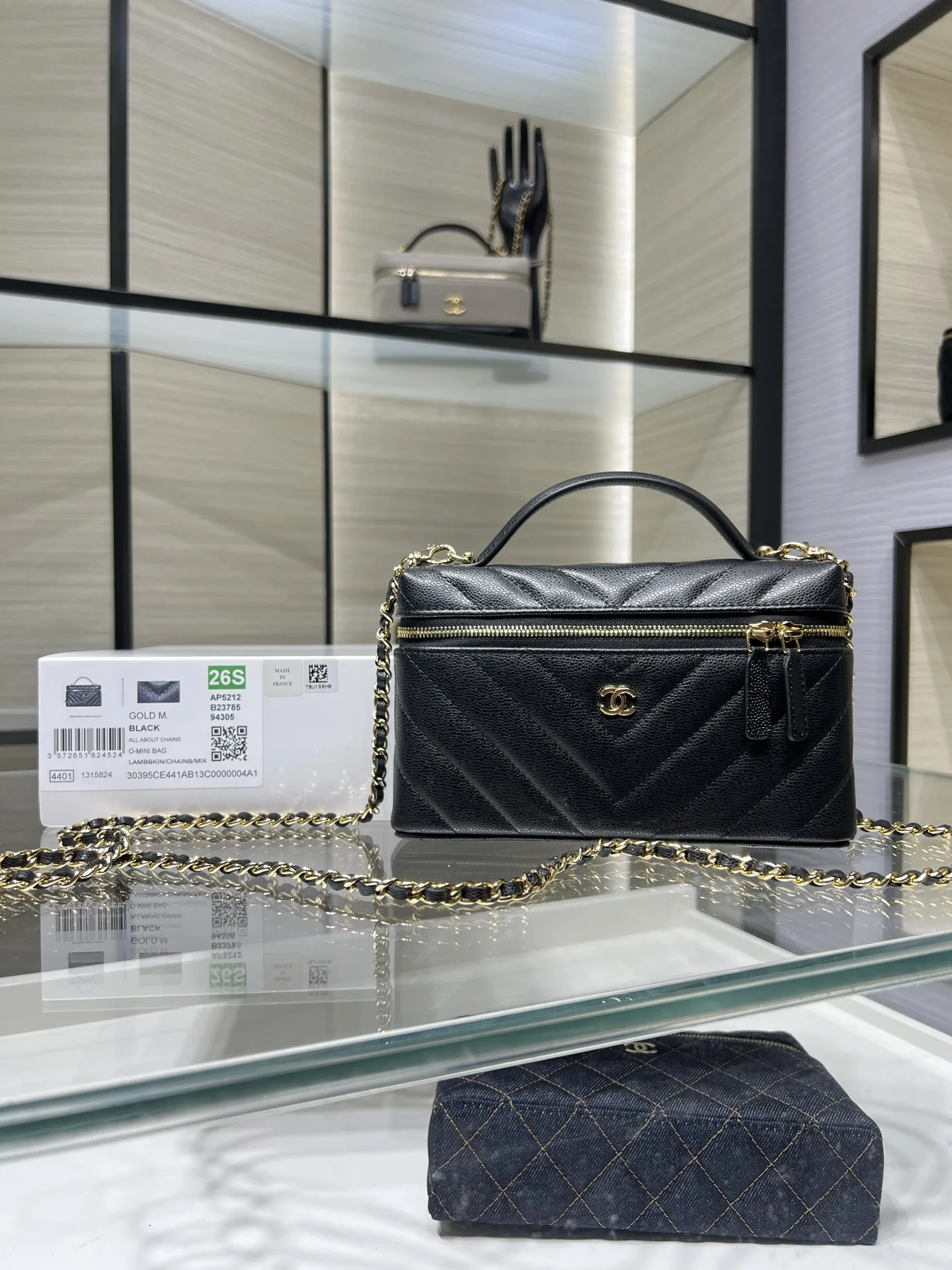 Chanel 26S new V-pattern LP chain handbag with handle. Made of leather.
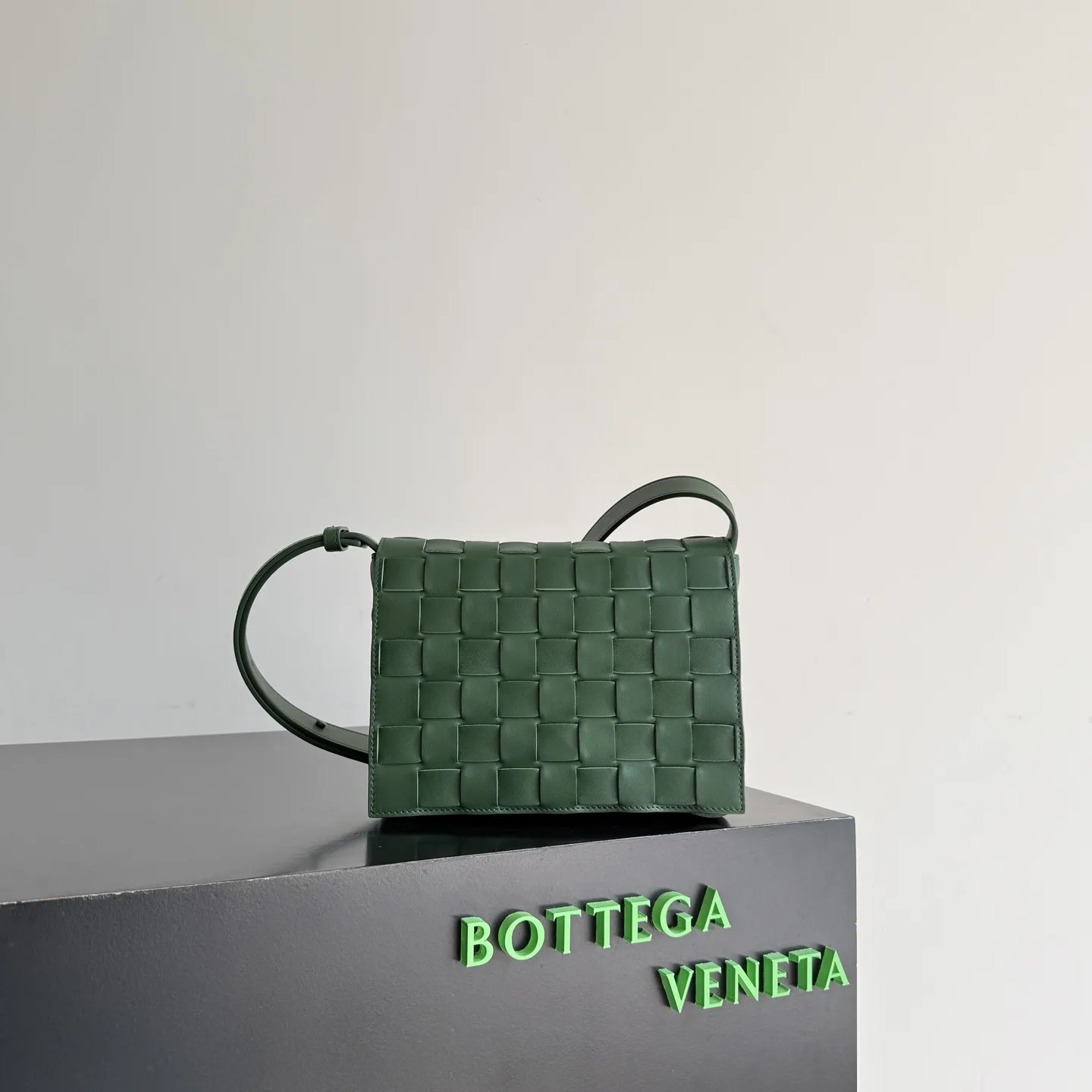 The Orto Messenger bag is truly impossible not to love 🖤It looks like a Cassette but it's not really that! Continuing the iconic classic weaving technique of BV, this Orto Messenger is sleek and tidy, and is a versatile all-purpose commuter bag suitable for both men and women.